
Adapting a Brand Name for the Saudi Market
Learn how professional brand name localization helps build trust, strengthen identity, and boost brand recognition in the Saudi market.
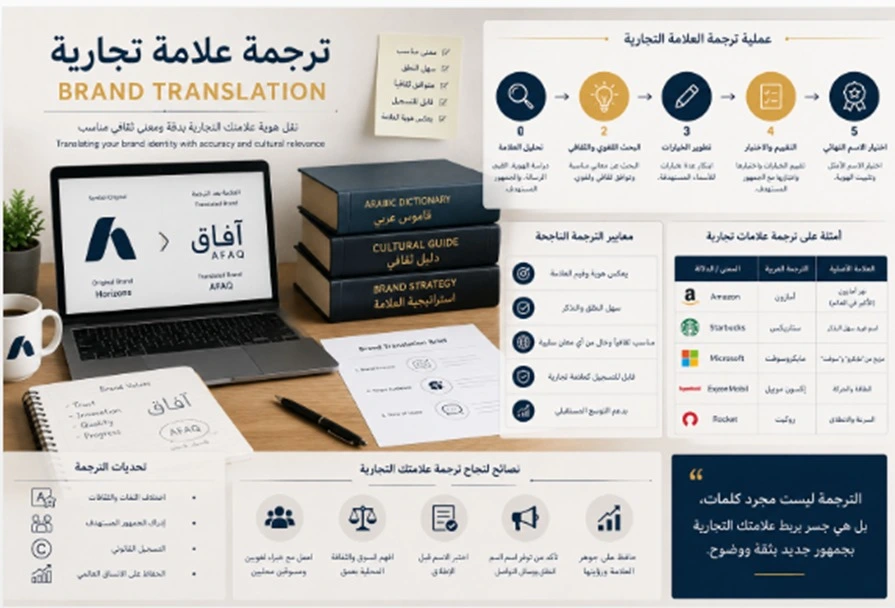
Adapting a brand name for the Saudi market has become a strategic step for any company or organization seeking to enter the Saudi market or strengthen its presence within it. A brand name is not merely a word displayed on a logo or business card. It represents the first point of contact between the brand and its target audience. When the adaptation process is carried out professionally and thoughtfully, it helps build trust, improves memorability, and strengthens the emotional connection with customers. On the other hand, random or literal adaptation may lead to negative consequences that affect the brand’s image and market acceptance. For this reason, selecting a name suitable for the Saudi market requires linguistic, marketing, and cultural expertise that preserves the brand identity while supporting its commercial objectives.
Adapting a Brand Name
Adapting a brand name is one of the most influential stages in determining the success of a brand within the Saudi market because the name is the very first element customers encounter before they explore the product, service, or marketing message. For this reason, the adaptation process cannot rely on direct translation or personal assumptions. It requires a thorough study of the brand identity, the characteristics of the target audience, and the values that the brand intends to communicate.
Through numerous projects targeting the Saudi market, it has become clear that some companies possessed excellent products and high-quality services but struggled to build brand awareness because they selected translated names that were not suitable for the local environment. In contrast, other brands achieved rapid growth because they successfully chose names that were easy to pronounce, culturally familiar, and capable of preserving the essence of the original brand.
The process of adapting a brand name also requires a deep understanding of the linguistic implications of proposed words within the Saudi environment. Certain words may carry alternative meanings or unintended associations when used in specific contexts. As a result, professional agencies conduct linguistic and marketing evaluations before approving any final name to ensure compatibility with the objectives of the brand.
The importance of adaptation extends beyond language alone. It contributes directly to trust-building and market expansion. Customers naturally engage more easily with names they can understand, pronounce, and relate to within their own cultural environment.
• Studying the brand identity before selecting an adapted name
• Considering Saudi cultural expectations throughout the adaptation process
• Testing pronunciation and memorability
• Preserving the essence of the original brand
• Increasing opportunities for successful market penetration
Choosing a Trade Name Suitable for Saudi Arabia
Choosing a trade name suitable for Saudi Arabia is a strategic decision that can influence the future of a brand for many years. A successful trade name does far more than identify a company or product. It functions as a marketing asset that shapes first impressions and establishes the brand’s position in the minds of customers. Therefore, the selection process should follow clear criteria that combine attractiveness, clarity, and differentiation.
One of the most important considerations when choosing a trade name suitable for Saudi Arabia is ease of pronunciation, spelling, and recall. Complicated or lengthy names often face greater challenges in gaining recognition and require more marketing effort to establish awareness. Simpler and more memorable names, on the other hand, tend to remain in customers’ minds and spread more effectively through word-of-mouth communication.
The name should also align with the nature of the business activity and the intended audience. A name suitable for a technology company may not be effective for a food brand, educational institution, or financial service provider. For this reason, market analysis and competitor research play an important role in the naming process.
Practical experience demonstrates that many successful brands in Saudi Arabia rely on names that possess a local feel or can be easily integrated into everyday language and communication. This does not mean abandoning the brand’s international identity but rather presenting it in a way that feels more relevant and accessible to customers.
• Selecting a name that is easy to pronounce and write
• Aligning the name with the business sector
• Studying competitors before finalizing the name
• Ensuring clarity for the target audience
• Creating a name capable of supporting future growth
Localizing Commercial Names
Localizing commercial names differs from traditional translation because the objective is to create the same impact that the original name generates within its native market. Many commercial names are built upon symbolic meanings, marketing concepts, or emotional associations that cannot be transferred directly into Arabic without losing part of their value.
For this reason, the localization process begins with understanding the complete background of the original name and identifying the reasons behind its selection. Specialists then search for linguistic and marketing solutions capable of conveying the same concept to the Saudi market while preserving the spirit of the brand.
This process also involves studying the sounds and letter combinations used in the name and evaluating how naturally they function in Arabic. In some situations, phonetic adaptation may be the most suitable solution, while in others, creative renaming or conceptual translation may produce better results. The final decision depends on the brand’s objectives and audience expectations.
Experience gained from international branding projects consistently demonstrates that success does not come from strict adherence to the original wording. Instead, it comes from achieving a balance between preserving global brand identity and adapting effectively to local market requirements.
• Understanding the original background of the commercial name
• Selecting the most suitable localization approach
• Ensuring ease of pronunciation in Arabic
• Preserving the marketing value of the name
• Balancing global identity with local relevance
Translating Commercial Names for the Saudi Market
Translating commercial names for the Saudi market represents a critical stage in brand localization because the goal is not merely to convert a name from one language into another. The objective is to present the name in a way that allows local audiences to understand it, engage with it, and remember it easily. The Saudi market possesses unique cultural and linguistic characteristics that often require international names to undergo professional adaptation before official launch.
Numerous successful marketing examples demonstrate that names achieving faster growth are those designed with Arabic language patterns and customer behavior in mind. Even major global brands invest significant resources in researching how their names should appear in new markets rather than relying on direct translation.
The process also requires consideration of both legal and marketing factors. The translated name must be available for registration, free from conflicts with existing trademarks, and suitable for future expansion plans. Professional translation therefore focuses not only on immediate needs but also on the long-term position and development of the brand.
This stage becomes even more important in highly competitive sectors where branding and first impressions strongly influence purchasing decisions. In such environments, the commercial name becomes one of the most valuable assets supporting trust, recognition, and differentiation.
• Presenting the name in a culturally appropriate manner
• Supporting brand expansion within Saudi Arabia
• Addressing legal and regulatory considerations
• Improving memorability and customer recall
• Enhancing opportunities for commercial success
Branding in Arabic
Branding in Arabic has become increasingly important as international and regional companies expand throughout Arabic-speaking markets. Building a brand in Arabic is not limited to translating content. It involves creating a complete experience through which customers feel that the brand speaks their language, understands their needs, and connects with their cultural environment.
Arabic branding begins with selecting the appropriate name and continues through the development of marketing messages, communication styles, and visual identity elements that align with local expectations. Every component of the brand should work together to create a unified and memorable impression.
A common mistake made by some organizations is translating content while leaving marketing messages unchanged. As a result, campaigns may lose much of their original impact because the communication style no longer resonates with local audiences. Successful Arabic branding requires adaptation, not merely translation.
Brands that invest seriously in Arabic branding often achieve stronger customer relationships, higher trust levels, and greater loyalty because language functions not only as a communication tool but also as a mechanism for building emotional connections and reinforcing brand identity.
• Developing a complete Arabic brand identity
• Creating marketing messages suitable for local audiences
• Building trust through clear communication
• Unifying all brand elements
• Improving customer experiences within Arabic markets
A Trade Name Suitable for the Saudi Audience
Selecting a trade name suitable for the Saudi audience requires a deep understanding of local culture, consumer behavior, and the way people interact with brands in their daily lives. A successful trade name is not necessarily the most creative or unusual one. Rather, it is the name that quickly establishes a connection with customers and clearly reflects the nature of the business.
Observing successful brands within Saudi Arabia reveals that many of them rely on simple, memorable names that integrate naturally into everyday communication. Such names enjoy a significant advantage because they spread more easily through recommendations and customer conversations. Clear and straightforward names also reduce confusion and make it easier for customers to search for the brand online and remember it later.
A trade name should also be appropriate for different customer segments and flexible enough to support future business growth. A name that is too narrowly focused may limit expansion opportunities, whereas a versatile name allows the company to diversify products and services without needing a complete rebranding effort.
For this reason, selecting a trade name suitable for the Saudi audience requires balancing simplicity and distinction while ensuring that the name can support a strong and sustainable brand image over time.
• Choosing a name that customers can easily use and remember
• Balancing simplicity with uniqueness
• Supporting digital marketing and online visibility
• Considering future growth opportunities
• Creating a positive impression among target audiences
Localizing Global Brands
Localizing global brands is one of the most complex challenges in brand identity development because international brands often possess a long history and a well-established reputation that must be preserved when entering new markets. The objective is not to replace the original identity but to present it in a way that feels more relevant and accessible to local audiences.
The process begins by analyzing existing brand elements and determining which components should remain unchanged and which can be adapted for the Saudi market. This may involve adjustments to names, slogans, communication styles, marketing content, and even certain visual elements associated with the brand.
The success of global brand localization depends heavily on understanding what local customers expect from international brands and how they evaluate authenticity and trustworthiness. Saudi consumers generally appreciate brands that respect local culture and communicate professionally while maintaining their international credibility.
As a result, successful localization creates a balance between preserving global recognition and establishing meaningful local relevance. Brands that achieve this balance are often better positioned to expand, build loyalty, and maintain long-term success within Saudi Arabia and neighboring markets.
• Preserving the global image of the brand
• Adapting identity elements to local expectations
• Respecting cultural values and traditions
• Strengthening connections with Saudi consumers
• Supporting regional growth and expansion
Brand Naming
Brand naming is one of the most influential decisions affecting the future of any business because it serves as the foundation upon which all future marketing activities are built. A brand name is not simply an identifier. It is a strategic asset that contributes to first impressions, customer recognition, and long-term brand positioning. Therefore, the naming process requires careful planning that considers marketing, legal, and cultural factors alongside creativity.
Studies of successful companies consistently show that effective brand names share several characteristics. They are easy to remember, simple to pronounce, distinctive from competitors, and capable of communicating value to customers. A strong name should also remain relevant as the company grows and expands into new markets or introduces additional products and services.
The naming process requires evaluating whether the name should directly describe the business or function as a unique identity that acquires meaning through branding efforts over time. Both approaches can succeed, depending on the strategic objectives of the organization.
Successful brand naming is therefore not based solely on intuition or personal preference. It is a structured process involving audience analysis, competitor research, and long-term planning to ensure that the name contributes meaningful value to the overall brand strategy.
• Choosing a name aligned with brand objectives
• Researching competitors before final selection
• Prioritizing memorability and clarity
• Ensuring long-term flexibility and scalability
• Creating a strong foundation for brand development
Brand Identity Development
Brand identity development is a necessary step after selecting the appropriate name because identity determines how customers perceive and interact with the brand. Brand identity includes numerous elements such as logos, colors, typography, visual style, communication tone, and the values that the company expresses through its operations and customer interactions.
Identity development extends far beyond visual design. It involves building a clear and consistent personality that customers can recognize and trust. Consumers do not interact only with products and services. They engage with the complete image that a company presents. The clearer and more consistent this image is, the stronger the brand’s ability to establish trust and differentiate itself from competitors.
Successful brand identity development is built upon a genuine understanding of customer expectations, needs, and preferences. Identities created without audience research often struggle to achieve meaningful impact regardless of how visually impressive they may appear.
A well-developed brand identity also helps unify marketing efforts and communication activities, making the brand appear more professional and reliable over the long term. Consequently, identity development should be viewed as a strategic investment that influences every aspect of business performance.
• Building a clear and recognizable brand personality
• Unifying visual and marketing communications
• Increasing trust and credibility among customers
• Strengthening differentiation from competitors
• Supporting long-term growth and sustainability
Professional Brand Localization
Professional brand localization represents the final stage that brings together names, identity elements, and marketing communications within a unified framework tailored for the Saudi market. The purpose of professional localization is not merely to make the brand understandable in Arabic but to ensure that it can compete effectively, connect with customers, and establish a strong presence within the local environment.
The process begins with a comprehensive understanding of the brand, its objectives, and its target audience. Specialists then adapt all identity elements while preserving authenticity and improving local relevance. This includes names, logos, websites, advertising materials, marketing campaigns, and every customer touchpoint associated with the brand.
Professional localization requires expertise in language, marketing, and culture simultaneously. Accurate translation alone is insufficient if the resulting messages fail to resonate with the target market. Therefore, specialized agencies often rely on multidisciplinary teams capable of combining linguistic knowledge with strategic marketing insight.
Practical experience consistently demonstrates that brands investing in professional localization achieve stronger market acceptance, faster growth, and higher levels of customer trust than those relying on literal translations or quick solutions that ignore local market expectations.
• Preserving the original identity of the brand
• Adapting marketing communications for local audiences
• Improving customer experiences in Arabic
• Supporting growth and expansion within Saudi Arabia
• Increasing the commercial value of the brand
Conclusion
Adapting a brand name appropriately for the Saudi market is a strategic process that directly influences a brand’s ability to build strong relationships with customers and establish a sustainable presence. Successful adaptation goes far beyond translating a name. It includes selecting a trade name suitable for Saudi Arabia, developing brand identity, localizing global brands, and adapting marketing communications to align with local culture. When these activities are performed professionally and strategically, brands become better positioned to increase visibility, build trust, and strengthen their presence in one of the fastest-growing and most competitive markets in the region.
Frequently Asked Questions
What does adapting a brand name mean?
It is the process of modifying and localizing a brand name to suit Arabic-speaking audiences and the Saudi market while preserving the core identity and values of the brand.
Does localizing commercial names mean translating them literally?
No. The objective is to preserve the marketing impact and brand identity rather than simply converting words from one language into another.
Why is choosing a trade name suitable for Saudi Arabia important?
Because the name influences first impressions, memorability, customer trust, and the brand’s ability to compete effectively within the market.
What is the difference between localizing global brands and translating commercial names?
Commercial name translation focuses primarily on the name itself, whereas global brand localization includes the entire identity, marketing communications, and customer experience.
How does Arabic branding contribute to business success?
It improves communication with customers, builds trust, increases engagement, and strengthens emotional connections between consumers and the brand.
Why is brand identity development important after selecting a name?
Because identity gives the brand a clear personality, supports consistent communication, and helps differentiate it from competitors.
Can professional brand localization affect success in the Saudi market?
Yes. Professional localization significantly increases opportunities for visibility, engagement, customer trust, and long-term growth, while poorly executed localization can weaken the overall perception of the brand.
Need Help?
Contact us directly via WhatsApp and we will reply as soon as possible.
More Articles
University Case Study Review with Analysis and References
University case study review with problem analysis, evidence organization, theory application, references, recommendations, and final academic checking before submission.
Read Article → Thesis PreparationResearch Survey Design and Review Before Validation and Distribution
Research survey design and review before validation and distribution, including dimensions, items, response options, research objectives, pilot testing, and university requirements.
Read Article → Scientific Research WritingAPA 7 Reference Formatting for Arabic and English Sources
APA 7 reference formatting for Arabic and English academic sources, including in-text citations, reference lists, DOI links, quotations, and Saudi university requirements.
Read Article →