
Product Catalog and User Manual Translation for Saudi Arabia
Product catalog and user manual translation for Saudi Arabia, with accurate technical review, safety warnings, specifications, and market-ready content.

Product catalog and user manual translation for the Saudi market requires much more than translating product names and specifications because one file may combine marketing copy, operating instructions, safety warnings, technical tables, diagrams, maintenance procedures, and model numbers in a single document. An error in promotional wording is completely different from an error involving a warning, voltage value, or operating temperature. Saudi requirements also differ according to the product category and the technical regulation that applies to it, and some products require specific Arabic information or instructions before they can be placed on the market. Professional translation therefore begins by understanding the product, classifying the content, standardizing terminology, reviewing numbers and units, checking warnings, and producing a natural Arabic version that preserves the original information without shortening it or exaggerating its meaning.
Saudi Product Catalog Translation

Saudi product catalog translation requires looking at the catalog as part of the complete product journey in the market rather than simply as a visually attractive marketing file. A catalog may be used by the end customer, distributor, sales engineer, procurement manager, or installation technician, and each one of those readers is searching for different information. A buyer may focus on the model, features, price, or intended application, while an engineer may focus more heavily on capacity, dimensions, manufacturing materials, certifications, and technical performance. A technician may need installation or operating requirements. For that reason, strong catalog translation should not use one identical tone for every page.
For the Saudi market, it is also important to distinguish between commercial content inside the catalog and information or instructions that may be required by regulation on the product, packaging, or technical documentation. Saudi product-safety rules provide a general framework intended to protect consumers from risks associated with products available in the market, including products sold through electronic channels, while excluding categories that fall under the authority of other regulators such as products supervised by the Saudi Food and Drug Authority. Technical regulations also differ from one product category to another, which means it is inaccurate to assume that every product catalog in Saudi Arabia follows exactly the same language requirements.
Some technical regulations include explicit Arabic-language requirements. Depending on the product category, information displayed on the product or packaging may need to appear in Arabic or in Arabic and English and may include the product name, type, country of origin, intended purpose, storage instructions, and safety precautions. Guidance for low-voltage electrical equipment also emphasizes the importance of making safety information and instructions for use available in Arabic. This demonstrates why the catalog translator needs to understand whether a particular sentence is a marketing feature or safety-related information, because the degree of freedom in translation is completely different.
Consider a practical example. A foreign manufacturer may have a water-pump catalog stating that the product is “suitable for multiple applications.” That is marketing wording that can be expressed naturally in Arabic. However, if the same page specifies the maximum operating pressure, fluid temperature, and electrical connection requirements, those are technical details that should not be shortened or rounded simply to make the layout look cleaner.
Model names and technical codes also need to remain consistent. If the product has a registered commercial name and model number assigned by the manufacturer, the translator should not alter the number or rearrange the code. The explanatory text and product features can be translated, while the technical identity of the product should remain exactly aligned with the source.
-
The strongest project workflow begins by dividing catalog pages into marketing content technical specifications warnings and operating instructions because the amount of linguistic flexibility differs substantially between each category
-
Model numbers capacity values voltage dimensions temperatures and performance rates should undergo a dedicated numerical review because an error in any of them can affect purchasing decisions or the way the product is used
-
Before approving the Saudi version the product category and applicable technical regulation should be identified instead of assuming that labeling documentation and instruction requirements are identical for all products in the market
Product User Manual Translation
Product user manual translation requires thinking from the perspective of a person opening the product for the first time and having no previous knowledge of how it works. A good manual should explain how to begin, how to operate the product, how to avoid common mistakes, what to do when a problem appears, and when the user should stop using the product and contact support or a qualified technician. User-manual translation is therefore not the place for unnecessarily complex language. Clarity can become part of product safety.
For some product categories subject to specific Saudi technical regulations, Arabic instructions for use or safety information can be an explicit requirement. Guidance for low-voltage electrical equipment, for example, emphasizes providing safety information and operating instructions in Arabic. Requirements connected to conformity procedures for certain electrical products can also refer to user documentation in Arabic or in Arabic and English depending on the particular product and procedure. This illustrates why an Arabic version may be more than a marketing convenience in some cases.
Manual translation should preserve the operational sequence. If Step 3 depends on completing Step 2, the two should not be merged simply to reduce the amount of text. If the original says, “Disconnect the power supply before opening the cover,” the Arabic version should not weaken it into “It is preferable to disconnect the electricity.” “Must” and “should” do not carry the same level of obligation, and words that indicate the strength of an instruction need to remain equally strong in the translation.
Diagrams are also part of the manual. If an image labels components as 1, 2, and 3 and the accompanying text explains each number, the numbering needs to stay aligned. If physical buttons on the product are labeled in English, the manual may need to mention the actual button label alongside a clear Arabic explanation rather than translating the button name only and leaving the user searching for an Arabic label that does not exist on the device.
Another serious mistake is using several Arabic terms for the same component. If one section calls a part the “filter cover,” it should not suddenly become “filter door” and then “purification cover” in later sections when all three expressions refer to one physical part. The user may reasonably assume those are three different components.
-
Warning prohibition and precaution statements should preserve the same degree of force found in the source because turning a mandatory instruction into an optional recommendation changes the way the product may be used
-
Button names component names and icons should remain consistent throughout the manual so the user can connect the text to the image and the actual product without moving between several different names for the same item
-
A useful final test is to give the Arabic manual to someone who has not seen the source version because if that person can follow the instructions successfully using the translation alone it is a stronger practical quality indicator than grammar accuracy by itself
Product Catalog Translation into Arabic

Product catalog translation into Arabic requires a careful balance between marketing impact and technical accuracy. The catalog exists to help sell the product, but persuasive wording should never come at the cost of technical truth. A phrase such as “powerful performance” can be localized naturally, while a sentence stating “flow rate of 80 liters per minute at a specified pressure” must preserve both its meaning and figures.
The first step is identifying the audience. A catalog aimed at consumers differs significantly from a catalog prepared for engineers, contractors, or procurement teams. A consumer may need understandable benefits such as ease of use or reduced energy consumption where that claim is supported. An engineer usually needs capacity, power, manufacturing materials, compliance information, dimensions, and operating parameters.
The second issue involves common English marketing expressions that provide little value when translated literally. Words such as “smart,” “advanced,” and “high performance” appear frequently in product marketing, but they become much stronger when supported by information showing exactly what makes the product smart or high performing. Does the equipment automatically control a process? Does it include a sensor? Does it achieve a documented reduction in power consumption? When those facts exist, they should carry more of the persuasive message than a generic adjective.
Relative claims should also never be turned into absolute claims. If the source says “designed to improve efficiency,” the Arabic should not become “guarantees the highest efficiency in the market.” If it says “helps reduce energy consumption,” the translation should not promise a guaranteed percentage reduction unless a documented figure exists in the source.
From a layout perspective, Arabic content also needs to be reviewed after translation. Arabic sentences can occupy more space than English, and narrow tables may require careful adjustment or shorter headings, provided that no technical information is lost.
-
Commercial wording can be restructured so it reads naturally in Arabic but performance figures test results certifications and measurement values should never be changed simply to create a stronger marketing sentence
-
The language level should reflect the intended catalog audience because the information required by a procurement engineer is different from the information needed by a consumer buying a household product
-
Final review should include the designed file after the Arabic has been inserted because linguistically correct text still fails if it becomes too small to read gets cut off inside a table or disappears behind another visual element
Product Catalog Localization
Product catalog localization goes beyond translation because it focuses on making the document suitable for Saudi readers in terms of language, information presentation, units, and terminology without turning localization into a technical modification of the product itself.
Some foreign catalogs use units or abbreviations that are unfamiliar to the local audience. An additional metric or internationally recognized unit may be introduced as a reference where appropriate and approved, but the original measurement should not be removed without a clear reason. If the product is actually sold using inch-based sizing, for example, removing the inch value entirely and showing only centimeters can make model matching more difficult during ordering.
Localization also covers images and text embedded inside diagrams. If a diagram identifies device components or compares several models, important labels should not remain in English while the rest of the document appears in Arabic. The original part number or commercial expression can remain where technically necessary with the Arabic equivalent added alongside it.
The type of product also matters from a Saudi regulatory perspective. Technical regulations issued by the Saudi Standards, Metrology and Quality Organization differ according to the product category, and some regulations include Arabic-language requirements for labeling, instructions, or warnings. Professional localization therefore considers the requirements relevant to the specific category instead of relying on one broad rule for all products.
Cultural context can also influence imagery and promotional wording, particularly in consumer catalogs. However, cultural adaptation does not mean changing the product or hiding information. If an image or marketing element needs adjustment for the local market, that change should be coordinated with the brand owner and design team rather than being removed independently by the translator.
-
Localization adapts how the information is presented to Saudi readers but does not alter the model performance intended use warranty conditions or any technical fact associated with the product
-
Additional units can be provided as supporting information where useful but the original measurement should remain visible where it is connected to the product specification label or purchasing process
-
Images tables and diagrams should receive the same localization attention as ordinary paragraphs because leaving important terminology inside graphics in another language makes the file only partially localized
Operation and Maintenance Manual Translation

Operation and maintenance manual translation requires a higher level of organizational control because these documents are often used by technicians while carrying out real procedures. The instructions may involve starting equipment, shutting it down, inspecting it, replacing a part, lubricating a component, or completing scheduled maintenance. In that environment, vague wording can create practical problems.
The distinction between operation and maintenance should remain clear. Operating instructions explain how to use the equipment under normal conditions, while maintenance procedures cover inspection, replacement, servicing, and periodic technical work. If the source states that a particular procedure should only be performed by a “qualified technician,” the translated version should preserve that requirement and should not present the procedure as general guidance for every user.
Maintenance schedules require especially careful treatment. If a service is required every 500 operating hours or every six months, whichever comes first, the translation must preserve that exact logic. It should not be shortened to “maintenance every six months,” because that removes the 500-hour condition. The same principle applies to tightening torque, oil quantities, lubricant grades, filter specifications, and replacement intervals.
Saudi product-safety requirements also emphasize the responsibility of manufacturers and importers to provide consumers with information about risks that may not be immediately obvious so that appropriate precautions can be taken. Product-specific technical regulations may introduce even more detailed requirements. Translation of warnings and instructions therefore carries practical safety significance rather than serving only a linguistic purpose.
One of the strongest working methods is maintaining one standardized term for every component. If a part is called a “drain valve” in the operation section, it should remain the drain valve in the maintenance section, troubleshooting table, and spare-parts list unless there is a genuine technical reason to use another term.
-
Maintenance intervals operating-hour values and technical figures should be reviewed separately from the language because removing wording such as whichever comes first can completely change the maintenance schedule
-
Procedures that the source restricts to qualified technicians should retain that restriction and should not become general instructions intended for the end user
-
Troubleshooting tables should preserve the relationship between symptom probable cause and recommended action because shifting one row can direct a technician toward a completely unrelated procedure
Technical User Manual Translation
Technical user manual translation benefits from a product-specific glossary before the project begins, particularly when the manual is long or covers several related models. A technical manual may contain mechanical components, control screens, error messages, software functions, calibration procedures, replacement parts, and detailed service information.
A common project problem occurs when the first translator selects one term for a component and another translator uses a different term 100 pages later. A terminology list should therefore be extracted and approved early so every component, function, and system message has a consistent equivalent.
Device interfaces also require a specific strategy. If the actual screen displays an English term, the Arabic manual should help users connect the translated instruction with the text they will physically see. It may be useful to include the Arabic meaning together with the original English interface label where the device interface itself has not been localized.
Error messages require even greater precision. Error Code 17 must remain Error Code 17, and its description needs to match the corresponding cause and solution. Error codes should never be reordered simply to match Arabic text direction because technical support teams and manufacturers rely on the same codes internationally.
Technical symbols should not be treated like ordinary words either. Electrical symbols, voltage markings, protection ratings, component codes, and standardized abbreviations should remain intact while the explanatory text around them is translated.
-
A product glossary should be prepared before a large technical manual is divided between several translators so every member of the team uses the same names for components functions and system messages
-
Error codes part numbers and model numbers should remain identical to the source because technicians need those identifiers when communicating with technical support or ordering replacement parts
-
If the product interface itself remains in English the Arabic manual should help users connect Arabic terminology with the actual English labels that will appear on the screen instead of directing them to menus or buttons they cannot identify
Product Specification Translation into Arabic

Product specification translation into Arabic is one of the most numerically sensitive stages of product documentation. A technical specification may include power, voltage, frequency, dimensions, weight, capacity, flow rate, pressure, operating temperature, protection class, manufacturing materials, and permitted tolerances.
The most important rule is simple: never round a value independently. If the source says 9.8 kilograms, it should not become “approximately 10 kilograms” unless the source itself describes the value as approximate. If the operating range is from minus 10 to 45 degrees, neither limit should disappear and the negative sign must remain visible.
Units also need to remain consistent. If a table uses millimeters, one part of that table should not suddenly be converted into centimeters without a clear reason. The International System of Units is widely used in technical documentation and appears across technical requirements relevant to many product categories.
The translator must also distinguish between a nominal value, maximum value, minimum value, and operating range. A motor with a specified nominal power is different from a device whose maximum consumption reaches the same numerical value. Removing the descriptive qualifier can materially change the technical meaning.
Certifications and conformity claims should likewise not be expanded. If a product holds a specific conformity certificate, the translation should identify that certificate accurately. It should not claim that the product is “approved by all Saudi authorities” merely because one certificate exists.
-
Every numerical value should be reviewed together with its heading unit and value type because a correct number placed under the wrong specification remains incorrect information
-
Minimum and maximum operating limits tolerances and nominal ratings should remain clearly visible because those details are frequently used for technical comparison and model selection
-
Certificates conformity marks and regulatory references should be identified according to their actual names and scope without expanding them into a general claim of approval that the source document does not support
Commercial Product Catalog Translation into English
Commercial product catalog translation into English is particularly useful for Saudi companies that export products or target international distributors and customers. The English version needs clear commercial language that makes the product understandable internationally without stripping away its Saudi identity.
If the product is manufactured in Saudi Arabia, that can be an important commercial fact when it appears in the approved source. If the product has certifications, technical specifications, or production-capacity information, those details should be translated accurately rather than being expanded into broader claims.
English product copy generally benefits from direct wording. A long Arabic paragraph repeating quality and excellence statements may be expressed more efficiently in English, provided that no important fact is removed. Technical specifications and numerical tables, however, should not be compressed in the same way.
Product naming also requires a clear strategy. If the product already has an established brand name, it should remain consistent. If it has only an Arabic descriptive name, the English equivalent should be selected carefully and then reused across catalogs, invoices, export documentation, and correspondence instead of changing the name in every document.
A company preparing products for export should also distinguish catalog translation from destination-market compliance. An English catalog does not automatically mean the product label, certificates, warnings, or instructions satisfy the requirements of every importing country.
-
The English product name should be standardized early and used consistently across catalogs invoices certificates of origin and commercial correspondence wherever possible so the customer does not encounter several names for the same item
-
Marketing content can be edited to sound natural to international buyers but technical claims figures country of origin and certifications should remain aligned with the approved source
-
Translating a catalog for export does not automatically satisfy the labeling certification or language requirements of the destination country because every market can impose its own rules
Saudi Product Manual Translation
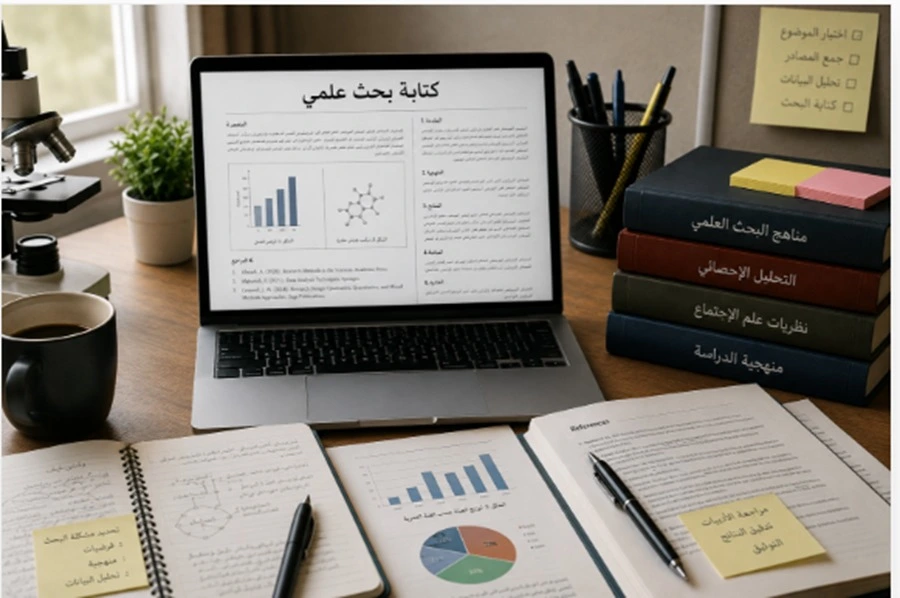
Saudi product manual translation requires identifying the product first and then understanding the regulatory pathway that applies to it. There is no single “Saudi manual format” that works equally for electrical equipment, toys, construction materials, household products, chemicals, and every other category.
The Saudi Product Safety Law and its implementing rules provide a general framework, while technical regulations define more specific requirements for individual product categories. One important aspect of the implementing framework is the use of Arabic in technical documentation and product-safety information, with certified translation potentially required where relevant documentation is not available in Arabic and competent authorities request it. Safety information presented through electronic platforms is also expected to be available in Arabic, with another language allowed alongside it.
This matters greatly for an importer who already has an English manual and wants to introduce the product into Saudi Arabia. Instead of waiting until comments appear late in the process, it is better to determine early what information is required on the packaging, what safety instructions must be provided, whether the user manual needs Arabic, and whether the product requires a conformity procedure, registration, or additional approval.
Saudi customs guidance also makes clear that importers are responsible for submitting the required core documents together with any additional documentation related to the nature of the goods, such as certificates or registrations required for certain products. Translation is therefore one part of preparing the product for the market but is not a substitute for conformity assessment or registration.
-
Before translating a manual for the Saudi market the product category and applicable technical regulation should be identified because language safety and conformity requirements differ significantly between product classes
-
Translation does not constitute a conformity certificate or product registration and its role is to communicate the required information accurately while regulatory procedures remain separate processes handled through the competent authorities
-
Preparing the Arabic version before final commercial launch helps the importer avoid expensive changes to packaging manuals or diagrams after printing and production have already been completed
Professional Catalog Translation Office
Choosing a professional catalog translation office should depend on its ability to manage a technical project rather than simply on the number of translators it employs. A 200-page catalog may combine marketing copy, specifications, diagrams, spare parts, and warnings. If it is distributed among several translators without a central glossary and controlled review, each section can start sounding as though it belongs to a different product.
The correct first step is file analysis. Is the source editable? Is it an InDesign or similar design file? Is the content embedded inside images? Are there large technical tables? Do multiple models reuse the same paragraphs? After the file structure is understood, terminology can be extracted and the project can be divided between technical translators and marketing editors according to the content type.
The strongest quality-control process normally has at least two stages. The first is a linguistic and technical comparison against the source. The second takes place after translation has been inserted into the final design. Some errors only become visible after layout, such as a figure moving into the wrong row, an arrow pointing to the wrong component, or table columns reversing unexpectedly.
There is also no single universal price for catalog translation services. Pricing depends on word count, number of pages, technical specialization, number of tables and graphics, formatting requirements, number of models, turnaround time, and whether the project involves direct translation only or full localization with layout review.
For products intended for Saudi Arabia, a strong translation office also avoids claiming that every category follows identical regulatory requirements. It asks what the product is and, where the service scope includes linguistic compliance support, reviews the relevant technical regulation because Saudi standards and technical requirements vary considerably between sectors and product categories.
-
Choose an office that asks about the product audience and source files before giving generic translation instructions because translating electrical equipment is fundamentally different from translating a furniture or construction-material catalog
-
Request a post-layout review rather than only reviewing the translation before design because many technical errors become visible only after text has been placed inside tables diagrams and graphics
-
Fair pricing should reflect technical specialization formatting review and visual complexity rather than word count alone because a small specification table may require more careful checking than an entire page of marketing text
Conclusion
Product catalog and user manual translation for the Saudi market requires a clear separation between marketing, technical specifications, safety, operation, and maintenance. Marketing language can often be localized into more natural Arabic, but a model number, voltage value, operating temperature, safety warning, or maintenance instruction should never be beautified or shortened at the expense of accuracy.
The Saudi market also does not treat every product under one identical rule. The Product Safety Law provides a general framework while technical regulations set more detailed requirements for individual product categories, and some categories require particular information, instructions, or warnings in Arabic or in Arabic together with English. The implementing framework also addresses the Arabic language in technical documentation and safety information provided electronically, which makes identifying the product category before translating the manual an essential step rather than a minor detail.
Before the project begins, prepare the latest catalog, manual, specifications, diagrams, and editable files. Identify the target market, audience, models, and relevant regulatory requirements and approve a terminology glossary before the work is divided across the team. Because the last thing a manufacturer needs is a specification page stating a maximum temperature of 50°C, an operating manual saying 45°C, and an Arabic label confidently deciding that the answer is 55°C. At that point, the product does not only need a new translator. Its documents need a family meeting so they can agree on one number.
Frequently Asked Questions
Does every product catalog sold in Saudi Arabia have to be in Arabic?
It is not accurate to apply one universal requirement to every type of catalog. Language requirements depend on the product category and the technical regulation that applies to it, and some regulations require particular information, instructions, or warnings in Arabic or in Arabic and English.
Are Arabic user manuals required for some products?
Yes. Certain product categories have clear Arabic-language requirements. Electrical equipment is one example where safety information and instructions for use may need to be provided in Arabic under the applicable requirements.
What is the difference between catalog translation and catalog localization?
Translation transfers the content accurately into Arabic, while localization also adapts language, headings, units, terminology, and presentation for the target market without changing the original technical specifications or product facts.
Can the translator shorten a user manual?
Not independently, particularly where warnings, safety information, operating procedures, and maintenance instructions are involved. Any shortening should be part of an approved editing process and should not remove information needed for safe or correct use.
Are product model names translated?
Model numbers and technical codes normally remain unchanged because they identify the product, while descriptions, features, and surrounding explanatory content are translated.
Do safety warnings need to be translated literally?
Their meaning and level of obligation should be preserved exactly, but the Arabic wording can still be natural and clear rather than copying foreign sentence structure word for word.
Can an additional local or metric unit replace the original measurement?
A supporting equivalent can sometimes be added where appropriate, but the original measurement should normally remain visible where it is tied to product specifications, labeling, or purchasing information, and any conversion must be accurate.
Is catalog translation enough to place a product on the Saudi market?
No. Translation is separate from conformity procedures, registration, certificates, and other regulatory requirements. The product category determines what additional steps may be required before import or sale.
How do I know which requirements apply to my product?
The product category should first be identified and then the relevant technical regulation and competent-authority requirements should be reviewed rather than relying on the requirements for another product that only appears similar.
Does technical product information need to be in Arabic?
Saudi product-safety implementing requirements address Arabic-language technical documentation, and where documentation is unavailable in Arabic a certified translation may be required when requested by the competent authorities.
Does online product-safety information need to be in Arabic?
Saudi product-safety requirements provide for safety information presented on electronic platforms to be available in Arabic, with another language also permitted alongside it.
Should diagrams and tables also be translated?
Yes, where they contain information used by customers or technicians. This includes table headings, diagram labels, callouts, notes, and textual information embedded in graphics.
What is one of the most dangerous mistakes in product specification translation?
Changing the unit of measurement, decimal point, minimum or maximum value, or omitting a qualifier such as nominal, maximum, or minimum are among the most serious errors because they can alter the technical meaning.
Can several translators work on the same catalog?
Yes, particularly on large projects, but a shared terminology glossary and central reviewer should be used so the same component or service does not receive several different names across the document.
Is a maintenance manual translated in the same style as a commercial catalog?
No. A commercial catalog allows more flexibility in marketing wording, while a maintenance manual requires precise procedural language tied to actions, intervals, values, and components.
Does translating a catalog into English help with export?
Yes, it can be an important commercial tool for international buyers and distributors, but it does not automatically satisfy the destination country’s labeling, certification, language, or regulatory requirements.
Can a user manual that exists only as images be translated?
Yes, provided the text is clear enough to work from, but editable source files are strongly preferred for large technical projects because they reduce the risk of missing text or figures embedded inside diagrams.
How much does product catalog translation cost?
Pricing depends on the number of words and pages, technical specialization, number of tables and graphics, number of models, formatting requirements, target language, turnaround time, and the level of review required.
How should I choose a catalog translation office?
Choose an office that asks about the product type, works with a controlled terminology glossary, provides technical and numerical review, and checks the final designed document rather than pricing the project only by page count.
What should I send to the translation office before work begins?
Send the latest catalog, user manual, technical specification files, editable diagrams, model list, and any previously approved terminology or translations. Also explain whether the product is intended only for the Saudi market or for several markets and whether the project requires direct translation or full localization.
Need Help?
Contact us directly via WhatsApp and we will reply as soon as possible.
More Articles
HR Policy and Employee Handbook Translation for Saudi Companies
HR policy and employee handbook translation for Saudi companies, with consistent terminology, clear procedures, and accurate bilingual workplace documents.
Read Article → Official Document Translation in Saudi Arabia with Guaranteed Government AcceptanceSaudi Advertising Campaign Localization That Persuades Customers
Saudi advertising campaign localization with persuasive copy, adapted offers, brand tone, and platform messaging to attract customers and conversions.
Read Article → Official Document Translation in Saudi Arabia with Guaranteed Government AcceptanceArabic Mobile App and Software Translation for Saudi Users
Arabic mobile app and software translation for Saudi users, with interface localization, RTL support, clear terminology, and smoother user experiences.
Read Article →