Professional Brand Translation in Saudi Arabia While Preserving Identity
Learn how professional brand translation and localization help build a strong identity, boost trust, and expand your brand in Saudi Arabia.
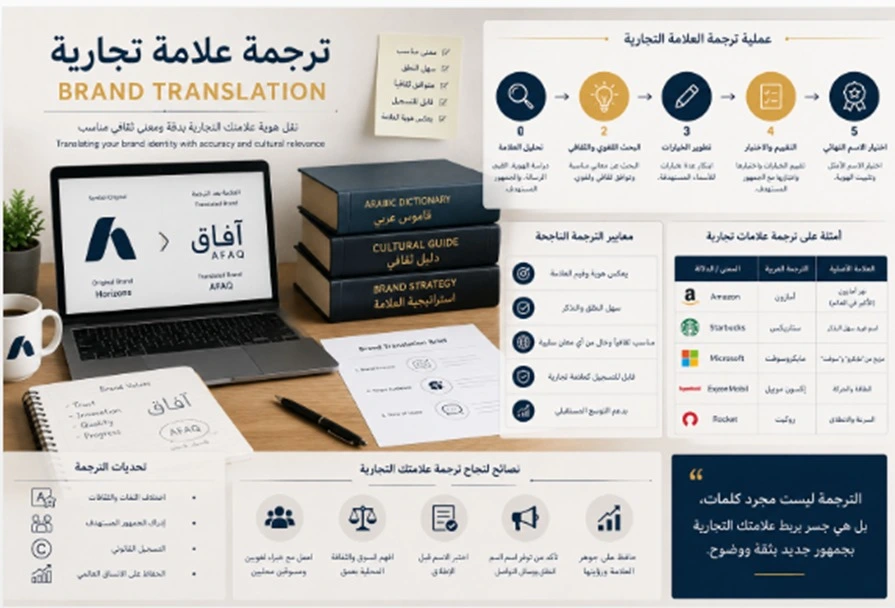
Brand translation in Saudi Arabia has become one of the essential steps for companies seeking to expand within the local market or reach a broader Arabic-speaking audience without losing their original identity. The process is not simply about transferring a name or slogan from one language to another. Instead, it requires a deep understanding of brand identity, the values represented by the brand, the nature of the target audience, and the characteristics of the local culture. In recent years, the Saudi market has witnessed the entry of thousands of international and regional brands, making professional brand translation more important than ever. A well-executed translation helps build trust and strengthen market presence, while a poorly planned translation can weaken the brand image and create negative impressions among potential customers.
Brand Translation in Saudi Arabia
Brand translation in Saudi Arabia differs significantly from traditional content or document translation because the primary objective is not merely transferring linguistic meaning. The goal is to transfer the entire personality of the brand to the local audience in a way that preserves its value, positioning, and marketing strength. When a new brand enters the Saudi market, the first thing customers encounter is its name, identity, and the initial impression associated with them. If translation is not handled professionally, the brand may lose a significant portion of its influence and market appeal.
Practical experience in brand localization projects demonstrates that some companies rely on literal translations of names and slogans without considering cultural background or linguistic implications within the target market. This often results in names that are difficult to pronounce, challenging to understand, or even culturally inappropriate. For this reason, professional organizations conduct both linguistic and marketing studies before approving any final translation.
Brand translation in Saudi Arabia is also influenced by the industry in which the company operates. Technology brands differ greatly from brands in food services, education, healthcare, or financial sectors. Each industry has its own communication style and customer expectations. Consequently, there is no universal formula that works for every brand. Each project must be treated as a unique case with its own goals, identity, and audience.
The importance of this process continues to grow as competition intensifies within the Saudi market. Modern consumers are increasingly aware and capable of distinguishing between brands that respect and preserve their identity and those that rely on superficial or poorly executed translations.
• Transferring brand identity accurately to local audiences
• Respecting Saudi cultural expectations during translation
• Avoiding literal translations of names and slogans
• Creating a strong and positive first impression
• Supporting successful market penetration
Translating Brand Names
Translating brand names is one of the most sensitive stages in establishing a localized brand identity because the name is the first element customers see and interact with before learning about products or services. Any decision regarding name translation must therefore be based on careful consideration of linguistic, marketing, and legal factors.
In many situations, the objective is not to translate the name literally but to create a version that generates the same emotional and marketing impact as the original. Some international brand names are based on symbolic, emotional, or historical meanings that cannot be transferred directly into Arabic. This is where specialists in translating brand names play a crucial role by balancing the preservation of the original brand spirit with the practical requirements of the Saudi market.
The translation must also account for pronunciation, spelling, and memorability. A successful brand name should be easy for customers to pronounce, remember, and use in daily conversations. One common mistake is choosing lengthy or complicated translated names that fail to resonate with the target audience, ultimately reducing brand awareness and market recognition.
This stage also requires reviewing legal considerations and ensuring that the translated name can be registered without conflicting with existing trademarks. Therefore, translating brand names is not merely a linguistic activity but a strategic business decision that can significantly influence the future success and visibility of the brand.
• Selecting names that are easy to pronounce and remember
• Preserving the spirit of the original brand
• Studying cultural and linguistic meanings
• Considering trademark registration requirements
• Building a strong local identity in the Saudi market
Professional Brand Localization
Professional brand localization involves much more than converting text from English into Arabic. It requires repositioning the brand in a way that aligns with the local environment while maintaining its original personality. Every successful brand possesses a story, a mission, and a set of values, all of which must remain visible after localization.
Experience from projects targeting the Saudi market demonstrates that successful localization begins with understanding the target audience and how they interact with names, slogans, and marketing messages. Messages that perform exceptionally well in Western markets may fail to achieve the same results in Arabic-speaking environments if translated directly. Consequently, professionals often adapt marketing communications to fit local cultural expectations while preserving the essence of the original message.
Professional brand localization also includes reviewing every communication element associated with the brand, including its name, slogan, advertising materials, website content, and promotional campaigns. The objective is to create a unified experience that makes customers feel the brand understands their language, needs, and expectations.
For this reason, professional localization should not be viewed as a secondary or cosmetic task. It is a long-term investment in building a strong and sustainable brand image within the Saudi market and establishing meaningful relationships with customers.
• Adapting brand identity to local culture
• Recreating marketing messages strategically
• Preserving the original brand personality
• Creating a unified customer experience
• Building stronger customer trust and engagement
Brand Identity Translation
Brand identity translation is significantly deeper than translating names or slogans because it focuses on transferring the complete perception that a brand seeks to establish in the minds of customers. Brand identity consists of interconnected elements that include mission, vision, values, communication tone, visual style, and the overall presentation of products and services. When companies enter the Saudi market, their success depends not only on the quality of their offerings but also on their ability to translate this identity effectively into the local environment.
Practical expansion projects consistently show that many organizations focus on translating text while neglecting the translation of brand identity itself. Websites and marketing materials may be translated correctly from a linguistic perspective, yet the overall message may fail to resonate with local customers or communicate the values the brand intends to represent. This demonstrates why brand identity translation should be treated as a strategic process rather than a simple translation task.
Effective brand identity translation requires a deep understanding of local consumer behavior, communication preferences, and trust-building mechanisms. Different markets respond to different persuasion techniques and value propositions. Therefore, a successfully translated identity is one that allows customers to feel that the brand speaks their language and understands their needs without losing its original character.
This process contributes directly to stronger customer loyalty, increased engagement, and greater long-term success because customers connect not only with products but also with the story, image, and values represented by the brand.
• Communicating the brand message clearly
• Aligning communication style with local audiences
• Preserving core brand values
• Creating a consistent market perception
• Strengthening emotional connections with customers
Translating Brands for the Saudi Market
Translating brands for the Saudi market requires a comprehensive marketing vision that extends beyond traditional linguistic considerations. The Saudi market possesses unique consumer and cultural characteristics that make it one of the most demanding environments regarding branding and identity. As a result, a brand’s success depends greatly on its ability to present itself in a manner aligned with local expectations.
One of the primary challenges international brands face when entering Saudi Arabia is that marketing messages that perform successfully elsewhere may not generate the same response locally. Therefore, translating brands for the Saudi market requires re-evaluating marketing content, promotional messages, and customer communication strategies. This process must be completed without compromising the brand’s original values or identity.
Competition within the Saudi market has also become increasingly intense, with local, regional, and international brands all competing for consumer attention. In such an environment, having a strong product alone is not enough. The way that product and brand are presented is equally important. Successful companies therefore rely on specialized teams that combine linguistic, marketing, and cultural expertise to ensure optimal market positioning.
Numerous commercial success stories demonstrate that brands investing in professional localization and strategic adaptation achieve faster market penetration and stronger customer trust than those relying on direct or literal translations that ignore local market dynamics.
• Studying customer behavior before approving translations
• Adapting marketing messages to local expectations
• Preserving brand differentiation in competitive markets
• Building trust with Saudi consumers
• Accelerating brand growth and visibility
Brand Translation Services
Brand translation services have evolved significantly in recent years due to the growing demand for specialized solutions that help companies expand into new markets without losing their identity. These services are no longer limited to translating names or promotional texts. Instead, they encompass a broad range of activities related to brand identity, marketing communications, customer engagement, and market positioning.
Professional brand translation services usually begin with a comprehensive analysis of the brand itself. Specialists evaluate the brand identity, values, communication style, and positioning before determining how these elements should be presented within the target market. The process includes reviewing brand names, slogans, advertising messages, websites, product descriptions, and marketing campaigns to ensure consistency across all communication channels.
An important component of brand translation services is conducting linguistic and cultural assessments before finalizing any translation. These evaluations help identify potential misunderstandings, negative connotations, or cultural conflicts that may affect the perception of the brand. Such assessments are particularly important when entering highly competitive markets where first impressions can significantly influence customer decisions.
As a result, brand translation services have become an essential part of expansion strategies for organizations seeking to establish a strong and sustainable presence in Saudi Arabia and throughout the Arab world.
• Analyzing brand identity before translation begins
• Reviewing names slogans and marketing messages
• Testing cultural and linguistic suitability
• Maintaining consistency across communication channels
• Supporting market expansion and growth strategies
Translating Commercial Names
Translating commercial names is one of the most delicate tasks in marketing translation because a commercial name represents far more than a simple identifier. It is a valuable marketing asset and a reflection of the reputation, recognition, and emotional associations that a company has built over time. Any mistake during translation can affect how customers perceive the brand and may weaken its ability to compete effectively in a new market.
The process begins by understanding the origin and purpose of the commercial name. Some names are based on direct meanings while others are connected to the company’s history, vision, values, or founder. Because of these differences, commercial names cannot all be translated using the same approach. Each case requires a customized strategy that respects the original purpose while adapting to local expectations.
Translating commercial names also involves evaluating pronunciation and memorability. A name that sounds attractive in its original language may become difficult to pronounce or remember if translated incorrectly. Therefore, professionals often test multiple alternatives before selecting the final version to ensure usability and market acceptance.
Additionally, legal reviews are necessary to confirm that the translated name can be registered and does not conflict with existing trademarks. For this reason, translating commercial names is not merely a linguistic exercise but a strategic decision that directly influences long-term brand success.
• Understanding the purpose behind the original name
• Protecting the marketing value of the brand
• Ensuring pronunciation and memorability
• Reviewing cultural and legal implications
• Creating a distinctive market presence
Preserving Brand Identity
Preserving brand identity is the primary objective of every professional translation and localization project. A successful brand is built over years through a combination of values, customer experiences, visual elements, and communication strategies. When entering a new market, the challenge is maintaining these essential characteristics while making the brand relevant and accessible to local audiences.
Many international companies have learned that focusing solely on language translation can be a costly mistake. Content may be translated accurately, yet customers may still feel disconnected from the brand if its personality and values are not communicated effectively. Preserving brand identity therefore requires a comprehensive understanding of what differentiates the brand from competitors and what makes it meaningful to customers.
Consistency across all communication channels is equally important. Websites, advertising campaigns, social media content, customer support materials, and promotional messages should all reflect the same brand values and personality. Customers should experience a unified identity regardless of language or market.
Organizations that successfully preserve brand identity during translation are often better positioned to build trust, strengthen customer loyalty, and achieve sustainable growth because they remain recognizable and authentic while adapting to local expectations.
• Maintaining core brand values and personality
• Ensuring consistency across communication channels
• Avoiding loss of brand character during translation
• Strengthening customer trust and loyalty
• Creating a unified brand experience
Brand Translation for Marketing
Brand translation for marketing differs from traditional business translation because its purpose extends beyond conveying information. The goal is to influence customer behavior, encourage engagement, and strengthen the emotional connection between consumers and the brand. Therefore, marketing translation relies heavily on understanding consumer psychology, purchasing behavior, and cultural expectations.
When translating marketing campaigns, slogans, and advertising messages, it is essential to preserve the persuasive and emotional impact of the original content. In many cases, this requires adaptation rather than direct translation. Messages may need to be restructured or rewritten to achieve the same effect within the Saudi market while remaining faithful to the original brand strategy.
Brand translation for marketing also contributes to stronger advertising performance, higher engagement rates, and better return on marketing investments. Messages that resonate with customers in their own language and cultural context are more likely to generate positive responses and encourage purchasing decisions.
Numerous marketing studies have shown that consumers prefer interacting with brands that communicate naturally and demonstrate an understanding of local culture. Consequently, marketing translation has become a key factor in achieving commercial success within Saudi Arabia.
• Delivering persuasive marketing messages effectively
• Preserving emotional impact and brand appeal
• Increasing customer engagement and interaction
• Supporting advertising performance in local markets
• Improving commercial growth opportunities
Localizing Brand Identity
Localizing brand identity represents the most comprehensive stage in adapting brands for Arabic-speaking markets. Localization goes far beyond translating words or modifying names. It involves reshaping the presentation of the brand so that it feels relevant to local audiences while preserving the essence of the original identity.
The process begins with analyzing every component that contributes to the brand personality, including its mission, vision, values, communication style, and visual identity. These elements are then adapted to align with local expectations, cultural norms, and customer preferences within the Saudi market. The objective is to achieve a balance between authenticity and local relevance.
Brand identity localization strengthens customer relationships because it helps consumers feel that the brand understands their needs and communicates with them naturally. This increased relevance often leads to higher trust levels, stronger loyalty, and broader market acceptance.
Organizations that invest in professional brand identity localization typically enjoy greater opportunities for expansion and long-term success compared to those relying on direct translation methods that fail to account for cultural differences and local market realities.
• Adapting brand identity to local cultural expectations
• Preserving the essence of the original brand
• Strengthening relationships with customers
• Supporting long-term market expansion
• Building a strong and sustainable presence in Saudi Arabia
Conclusion
Brand translation in Saudi Arabia has become a strategic necessity for organizations seeking to establish a strong local presence while maintaining their professional image and original identity. Successful translation is not limited to transferring words from one language to another. It involves translating values, messages, positioning, and brand personality in a way that preserves authenticity while making the brand more accessible to local audiences. When brand names, brand identity, and marketing communications are translated according to professional linguistic and marketing principles, companies become better equipped to compete, grow, and achieve long-term success in the Saudi market.
Frequently Asked Questions
What is brand translation in Saudi Arabia?
It is the process of adapting brand names, identity elements, and marketing communications into Arabic in a way that aligns with the Saudi market while preserving the original brand personality.
Is translating brand names different from ordinary translation?
Yes. The objective is not simply to translate words but to preserve the marketing value, emotional impact, and identity associated with the brand.
Why is preserving brand identity important during translation?
Because brand identity represents the perception customers have of a company. Poorly executed translation can weaken trust, recognition, and market performance.
What are the benefits of brand translation for marketing?
It improves communication with customers, increases engagement, strengthens advertising effectiveness, and enhances the likelihood of commercial success.
What is the difference between translation and localization for brands?
Translation focuses on transferring content from one language to another, while localization adapts identity, messaging, and communication strategies to fit the local culture and market.
Do all brands need brand identity localization?
In most cases, yes. Especially when targeting Saudi Arabia or Arabic-speaking markets, localization helps create stronger connections with local audiences.
How can I choose a professional provider of brand translation services?
It is best to work with specialists who have experience in marketing translation, brand development, and Saudi market localization and who understand local consumer behavior and cultural expectations.
Need Help?
Contact us directly via WhatsApp and we will reply as soon as possible.
More Articles
University Case Study Review with Analysis and References
University case study review with problem analysis, evidence organization, theory application, references, recommendations, and final academic checking before submission.
Read Article → Thesis PreparationResearch Survey Design and Review Before Validation and Distribution
Research survey design and review before validation and distribution, including dimensions, items, response options, research objectives, pilot testing, and university requirements.
Read Article → Scientific Research WritingAPA 7 Reference Formatting for Arabic and English Sources
APA 7 reference formatting for Arabic and English academic sources, including in-text citations, reference lists, DOI links, quotations, and Saudi university requirements.
Read Article →