
Requirements for Proper Statistical Analysis in Scientific Research
Learn the requirements of proper statistical analysis, choosing the right tests, improving data quality, and ensuring accurate research results.
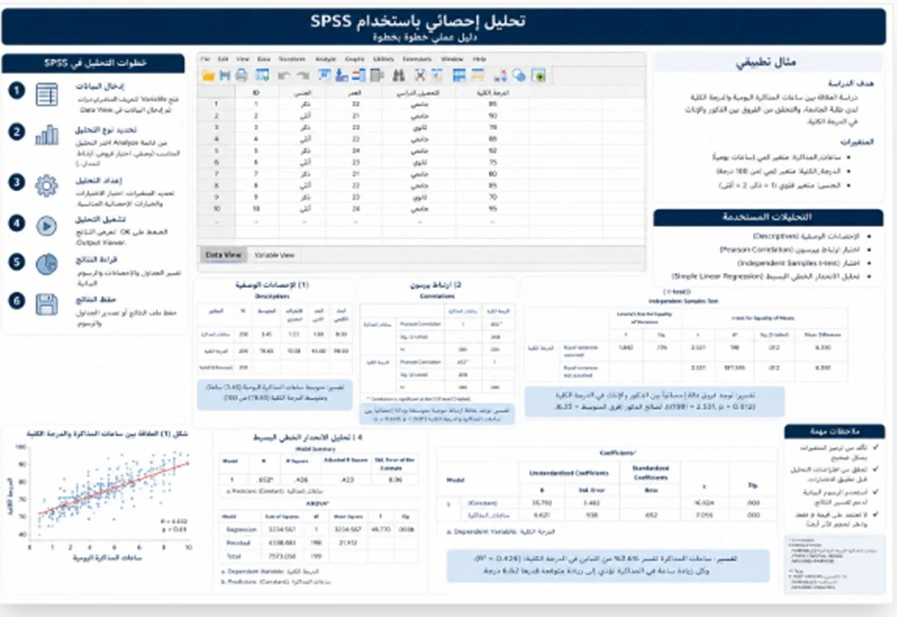
Statistical analysis is considered one of the most influential stages in determining the quality and final outcomes of scientific research because it is the phase in which raw data is transformed into meaningful information that can be used to answer research questions and test study hypotheses. Despite the importance of this stage, many researchers focus heavily on collecting data and designing questionnaires while paying less attention to the requirements of proper statistical analysis. This often leads to inaccurate findings or conclusions that do not truly reflect the reality of the collected data. For this reason, understanding the foundations and requirements of statistical analysis has become essential for every researcher seeking to produce a reliable scientific study that is suitable for academic evaluation, publication, or thesis defense. Every step in the process, beginning with data preparation and ending with the interpretation of results, directly affects the credibility and scientific value of the research.
Requirements for Proper Statistical Analysis
The requirements for proper statistical analysis begin long before opening any statistical software or entering data into a computer. Successful analysis does not depend solely on technical tools. It starts during the research design stage through selecting an appropriate methodology and identifying the nature of the variables that will be measured. Through extensive experience reviewing academic studies and graduate theses, it becomes clear that many statistical problems originate from mistakes made during the early stages of research rather than during the analysis process itself.
One of the most important requirements for proper statistical analysis is ensuring that the collected data is directly related to the objectives and research questions of the study. Researchers must also review questionnaires and measurement instruments carefully to verify that the data is complete and free from errors before conducting any statistical procedures. Sample size is another critical factor because small samples may prevent the use of certain statistical tests or lead to unstable and unreliable findings.
Proper analysis also requires understanding the nature of the data and classifying variables correctly as nominal, ordinal, interval, or ratio variables because this classification directly influences the selection of appropriate statistical tests. One common mistake among researchers is using statistical tests that do not match the nature of their data, which can produce misleading conclusions even when the analysis is technically executed correctly.
The requirements for proper statistical analysis also include the ability to interpret findings scientifically rather than merely presenting tables and numerical outputs. The true value of analysis lies not in generating results but in understanding their meaning and connecting them to the study objectives, theoretical framework, and previous literature.
• Ensuring data quality before analysis begins
• Selecting an appropriate sample size
• Classifying variables correctly
• Using statistical tests that match the nature of the data
• Interpreting results within the scientific context of the study
Statistical Analysis in Scientific Research
Statistical analysis in scientific research serves as the bridge connecting collected data to meaningful conclusions. Without proper statistical analysis, data remains nothing more than disconnected numbers that provide little scientific value. Modern scientific studies therefore rely heavily on statistical methods to describe phenomena, examine relationships between variables, and test research hypotheses.
The nature of statistical analysis in scientific research varies according to study objectives and the type of data collected. In some studies, the goal is simply to describe sample characteristics using means, standard deviations, and percentages. In other studies, researchers seek to compare groups, measure relationships between variables, or predict future outcomes using advanced statistical models.
Experience gained from working with numerous academic projects demonstrates that successful researchers do not select analytical methods based on convenience or popularity. Instead, they choose methods based on their suitability for answering specific research questions. The objective is not to use the largest number of statistical procedures but to apply the method most capable of producing accurate and reliable answers to the research problem.
Statistical analysis in scientific research also plays a major role in strengthening the credibility of a study and convincing readers, reviewers, or thesis committees that the conclusions are supported by quantitative evidence rather than personal impressions. For this reason, the quality of statistical analysis is often considered one of the strongest indicators of research quality and scientific rigor.
• Transforming data into meaningful findings
• Supporting hypotheses and conclusions with numerical evidence
• Measuring relationships and differences between variables
• Enhancing the reliability and credibility of research
• Contributing to accurate scientific decision-making
Conditions for Statistical Analysis in Research
Reliable scientific findings cannot be achieved without complying with the conditions for statistical analysis in research. These conditions ensure the validity of analytical procedures and the accuracy of resulting conclusions. One of the most important conditions is verifying the validity and reliability of research instruments because any weakness in measurement tools will directly affect the quality of results regardless of how sophisticated the analysis may be.
The conditions for statistical analysis in research also require researchers to verify that their data meets the assumptions associated with selected statistical tests. Some tests require normally distributed data, while others require homogeneity of variance between groups. Ignoring these assumptions reduces accuracy and may lead to invalid conclusions.
Researchers must also address missing values and outliers before conducting statistical procedures. Large amounts of missing data or extreme values can significantly influence means, standard deviations, and hypothesis testing results. For this reason, experienced researchers devote considerable attention to data screening and cleaning before analysis begins.
Another important condition involves documenting all statistical procedures within the methodology section so that readers and future researchers can understand and replicate the analytical process if necessary. This transparency has become a fundamental element of high-quality modern research.
• Verifying the validity and reliability of research instruments
• Ensuring that test assumptions are satisfied
• Handling missing values and outliers scientifically
• Documenting all analytical procedures within the study
• Following appropriate statistical methodologies throughout the research process
Analysis of Academic Data
The analysis of academic data is the stage in which researchers begin extracting meaningful insights from the information collected during their studies. After designing research instruments and gathering responses or observations, the next critical step is organizing and interpreting the data in a way that supports the research objectives and answers the study questions. For this reason, the analysis of academic data involves much more than operating statistical software or generating tables. It includes a series of scientific procedures aimed at understanding the studied phenomenon accurately and systematically.
Through extensive experience reviewing university research papers and graduate theses, it becomes evident that one of the most common mistakes researchers make is rushing into statistical testing before examining the characteristics of their data. Data requires preliminary screening that includes checking entries, identifying missing values, verifying coding accuracy, and correcting errors that could influence final results. Researchers must also understand the nature of each variable and its role within the study before selecting analytical methods.
Successful analysis of academic data is characterized by the ability to connect statistical outcomes with the research context. Numbers alone are not sufficient unless they are interpreted in relation to the research problem, objectives, and theoretical background. Professional researchers therefore go beyond presenting numerical findings and explain their scientific implications while linking them to previous studies and established theories.
The analysis of academic data also varies across disciplines. Educational studies may rely on different statistical approaches than medical, administrative, social, or engineering research. Consequently, analytical procedures must always align with the nature of the discipline and the methodology used within the study.
• Reviewing and screening data before analysis
• Verifying accurate coding and data entry
• Selecting analytical methods appropriate to the academic discipline
• Connecting results to research objectives and questions
• Providing clear scientific interpretations of findings
Statistical Analysis Standards
The quality of scientific research depends heavily on adherence to statistical analysis standards that ensure methodological accuracy and reliable findings. Not every analysis performed using statistical software qualifies as scientifically sound. Instead, researchers must follow a set of established standards throughout every stage of the analytical process to guarantee that results are credible, interpretable, and academically valuable.
One of the most important statistical analysis standards is ensuring that the selected analytical technique matches the nature of the data. Tests designed for quantitative variables may not be suitable for qualitative variables, and vice versa. Analytical decisions should be based on scientific reasoning rather than personal preference or convenience. Compliance with statistical assumptions is also a critical standard because ignoring assumptions can significantly compromise result accuracy.
Statistical analysis standards further require transparent documentation of all procedures performed during the study. Tables, charts, and statistical outputs should be organized clearly and presented in a manner that facilitates understanding and interpretation. Researchers should avoid excessive technical complexity that may confuse readers and instead focus on communicating findings effectively.
Modern research also emphasizes practical significance in addition to statistical significance. While many researchers focus solely on probability values and significance levels, contemporary standards encourage evaluating the practical impact and real-world implications of findings within the relevant scientific field.
• Selecting analytical methods that match the data type
• Respecting the assumptions of statistical procedures
• Documenting analytical processes transparently
• Presenting results clearly and professionally
• Considering practical significance alongside statistical significance
Choosing the Appropriate Statistical Test
Choosing the appropriate statistical test is one of the most important decisions affecting the quality and validity of scientific research. Even when data collection is accurate and sample selection is appropriate, the use of an unsuitable statistical test can lead to incorrect conclusions. For this reason, experienced researchers invest considerable effort in understanding their data and study objectives before selecting any analytical procedure.
The choice of statistical test depends on several factors, including variable types, the number of groups being compared, and the nature of the relationship being investigated. A test used to compare two groups may be entirely different from one designed to examine correlations or predict future outcomes. Sample size and data distribution also play major roles in determining which test should be used.
A common issue observed in master's theses and doctoral dissertations is that researchers sometimes select statistical tests simply because they were used in previous studies without verifying whether those tests are appropriate for their own data. This practice can lead to inaccurate findings even when the technical execution of the analysis is correct.
Researchers must also understand the meaning of the results generated by statistical tests rather than focusing solely on significance values or numerical outputs. The ultimate purpose of statistical testing is not merely producing numbers but providing scientifically meaningful answers to research questions and supporting sound academic conclusions.
• Examining variable characteristics before selecting a test
• Considering sample size and data distribution
• Choosing tests according to research objectives
• Avoiding blind imitation of previous studies
• Interpreting test outcomes scientifically and accurately
Research Data Analysis Quality
Research data analysis quality is one of the most important factors determining the scientific value of any academic study. Even when data collection procedures are carefully designed and measurement instruments are reliable, poor analysis can produce misleading findings or conclusions that fail to reflect the true nature of the phenomenon being investigated. As a result, data analysis quality has become a major criterion used by universities and academic journals when evaluating research papers and graduate theses.
The quality of research data analysis begins with the quality of the data itself. The more complete, organized, and accurate the data is, the greater the likelihood of obtaining reliable findings. Selecting suitable analytical techniques also contributes directly to analysis quality. The objective is not to use the greatest number of statistical procedures but rather to apply the most appropriate methods for addressing the research problem.
Analysis quality is also influenced by the researcher’s ability to interpret findings correctly. Many studies contain precise tables and statistical outputs yet suffer from weak interpretations or inadequate connections to study objectives. Therefore, true analytical quality lies not in the numbers themselves but in the researcher’s ability to transform those numbers into meaningful scientific knowledge.
Careful review of analytical procedures before finalizing results is equally important. Repeated verification helps identify potential errors and strengthens confidence in conclusions and recommendations.
• Using accurate and well-organized data
• Applying suitable analytical techniques
• Providing comprehensive scientific interpretations
• Reviewing results before final approval
• Linking findings directly to research objectives
Statistical Analysis for Master's Theses
Statistical analysis for master's theses is typically more advanced and comprehensive than the analysis conducted in ordinary undergraduate research projects because a master's thesis is expected to demonstrate the student's ability to apply scientific research methods at a higher academic level. For this reason, thesis committees expect statistical procedures to be carefully selected, scientifically justified, and directly aligned with the research objectives and questions.
Through extensive experience reviewing master's theses across various academic disciplines, it becomes evident that the statistical phase is often one of the most challenging stages for graduate students. This difficulty arises from the wide range of available statistical techniques and the complexity of determining which methods best fit the research design. As a result, researchers must thoroughly understand their variables, research questions, and methodological framework before choosing any analytical approach.
Statistical analysis for master's theses also requires careful examination of statistical assumptions, assessment of instrument validity and reliability, and implementation of analytical procedures that go beyond basic descriptive statistics. Graduate-level research often involves studying relationships, measuring effects, comparing groups, and testing theoretical models in greater depth. Thesis committees frequently evaluate not only the correctness of the statistical procedures but also the researcher's ability to justify methodological decisions and defend analytical choices during the thesis defense.
Furthermore, statistical analysis for master's theses extends beyond performing calculations. Researchers must present findings clearly, discuss results critically, compare outcomes with previous literature, and explain their significance within the broader academic context. The ability to provide meaningful interpretation often distinguishes exceptional theses from average ones.
• Selecting advanced statistical procedures appropriate for graduate research
• Examining validity and reliability with greater rigor
• Conducting deeper analysis of relationships and effects
• Scientifically justifying methodological decisions
• Linking findings to previous literature and theoretical frameworks
SPSS Requirements for Research
SPSS has become one of the most widely used statistical software packages in academic research because of its ability to perform a broad range of analytical procedures efficiently and systematically. However, using SPSS alone does not guarantee accurate results. The requirements of SPSS for research begin long before data is entered into the software itself.
Researchers must first organize their datasets properly by defining variables, assigning codes, and structuring data according to the objectives of the study. Accurate data entry is critical because even minor mistakes can significantly affect statistical outputs and final conclusions. Understanding variable properties within SPSS is equally important because these settings influence how the software processes data and determines which analyses are available.
SPSS requirements for research also include the ability to read and interpret statistical output correctly. Many researchers can execute commands successfully but struggle to understand tables, significance values, confidence intervals, and effect sizes generated by the software. Consequently, effective use of SPSS depends not merely on operating the program but on understanding the statistical meaning behind its outputs.
Professional academic research additionally requires researchers to document all procedures performed in SPSS so that analytical decisions remain transparent and reproducible. This documentation strengthens research credibility and facilitates future review by supervisors, examiners, or journal reviewers.
• Organizing data properly before entry
• Defining and coding variables accurately
• Selecting appropriate statistical procedures within SPSS
• Interpreting statistical output correctly
• Documenting all analytical procedures transparently
Common Statistical Analysis Errors
Common statistical analysis errors are among the primary reasons why many scientific studies lose part of their academic value despite having strong research topics and valuable datasets. These errors can occur at various stages of the research process, beginning with data collection and continuing through analysis and interpretation. Understanding these mistakes is therefore an essential component of proper statistical analysis.
One of the most common errors involves selecting statistical tests that do not match the nature of the data or the objectives of the study. Researchers may also ignore the assumptions required for specific statistical procedures, which can substantially reduce result accuracy. Data entry mistakes, incorrect coding, and poor handling of missing values are additional problems frequently encountered in academic research.
Another widespread issue is the misinterpretation of findings. Some researchers focus exclusively on statistical significance while neglecting practical significance and scientific relevance. This can lead to exaggerated conclusions that are not fully supported by the evidence. A further mistake involves copying statistical outputs directly from software into the research report without providing interpretation or linking results to the research problem.
Academic experience consistently demonstrates that avoiding these errors does not necessarily require decades of expertise. Rather, it requires a systematic understanding of statistical methodology and a commitment to following sound research practices throughout every stage of the analytical process.
• Using statistical tests that do not fit the data
• Ignoring assumptions underlying statistical procedures
• Making errors during data entry or coding
• Misinterpreting statistical findings
• Presenting numbers without meaningful scientific discussion
Conclusion
The requirements for proper statistical analysis extend far beyond operating statistical software or performing a series of numerical calculations. They represent a comprehensive framework that begins with data quality and ends with accurate scientific interpretation. When researchers understand statistical analysis in scientific research, follow the conditions for statistical analysis in research, apply statistical analysis standards, and carefully choose appropriate statistical tests, they significantly enhance the reliability and academic value of their studies.
Attention to research data analysis quality, understanding SPSS requirements for research, and avoiding common statistical analysis errors all contribute to producing findings that are more accurate, credible, and useful for scientific decision-making. Ultimately, strong statistical analysis strengthens the entire research project and increases confidence in the conclusions and recommendations presented by the researcher.
Frequently Asked Questions
What are the requirements for proper statistical analysis?
They are the set of conditions and procedures that ensure statistical analysis is conducted accurately and scientifically, beginning with data preparation and ending with the interpretation of findings.
Why is statistical analysis important in scientific research?
Because it transforms raw data into meaningful findings, helps test hypotheses, answers research questions, and provides evidence-based conclusions.
How is the appropriate statistical test selected?
The choice depends on the type of variables, nature of the data, sample size, research objectives, and the hypotheses being examined.
What are the main SPSS requirements for research?
They include organizing data properly, defining variables accurately, selecting suitable statistical procedures, interpreting outputs correctly, and documenting analytical steps.
What are the most common statistical analysis errors?
Common errors include selecting inappropriate tests, ignoring statistical assumptions, making data entry mistakes, and misinterpreting findings.
Is statistical analysis for master's theses different from undergraduate research?
Yes. Master's thesis analysis is generally more advanced and requires deeper analytical procedures, stronger methodological justification, and more comprehensive interpretation.
How can researchers improve research data analysis quality?
By ensuring data accuracy, selecting appropriate analytical techniques, reviewing results carefully, interpreting findings scientifically, and connecting results to research objectives.
Need Help?
Contact us directly via WhatsApp and we will reply as soon as possible.
More Articles
University Case Study Review with Analysis and References
University case study review with problem analysis, evidence organization, theory application, references, recommendations, and final academic checking before submission.
Read Article → Thesis PreparationResearch Survey Design and Review Before Validation and Distribution
Research survey design and review before validation and distribution, including dimensions, items, response options, research objectives, pilot testing, and university requirements.
Read Article → Scientific Research WritingAPA 7 Reference Formatting for Arabic and English Sources
APA 7 reference formatting for Arabic and English academic sources, including in-text citations, reference lists, DOI links, quotations, and Saudi university requirements.
Read Article →