
Accurate Academic Thesis Translation in Saudi Arabia
Professional scientific thesis translation in Saudi Arabia with accurate terminology, academic formatting, expert proofreading, and quality for university submission.
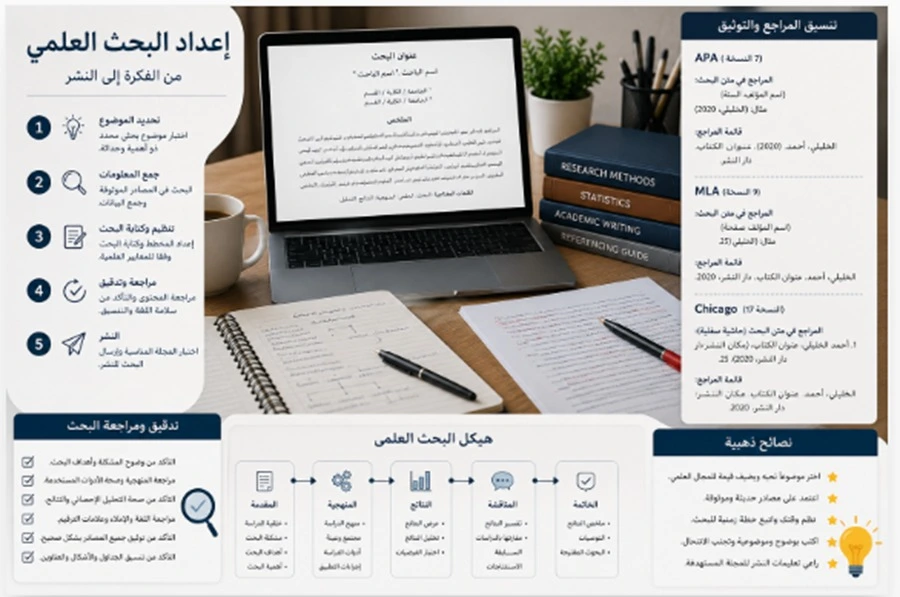
Scientific theses, whether master's or doctoral dissertations, represent the culmination of years of research, dedication, and scholarly effort. As a result, translating them leaves no room for errors or literal word-for-word rendering that could alter the intended scientific meaning or negatively affect their acceptance by universities or peer-reviewed journals. This is why many researchers in Saudi Arabia seek professional academic translation services that combine linguistic precision, deep subject-matter expertise, and full compliance with academic writing standards. When a thesis is translated by specialized academic translators and undergoes comprehensive scientific and linguistic review, the final document becomes significantly more professional and ready for submission with confidence. Choosing a translation office with proven experience in translating university theses also saves considerable time, minimizes costly revisions later, and preserves the scientific value of every section of the research.
Why Scientific Thesis Translation Requires Specialized Academic Expertise Rather Than General Translation
• Translating scientific theses differs fundamentally from translating ordinary documents because every academic discipline has its own specialized terminology, research methodologies, and scholarly writing conventions. Consequently, a translator without subject-specific expertise may produce language that is grammatically correct but academically inaccurate, leading to comments from supervisors, examination committees, or publishing institutions.
• When translating an accredited academic thesis in Saudi Arabia, the primary objective is to preserve every research concept exactly as intended without simplifying or modifying the scientific meaning. This includes maintaining the correct formatting of references, tables, figures, and citations according to the required academic style guide.
• Practical experience with academic translation projects has shown that many researchers encounter problems after relying on machine translation or translators unfamiliar with their specific academic field. Errors frequently appear in the interpretation of medical, engineering, legal, and administrative terminology, forcing researchers to retranslate entire sections of their thesis, incur additional expenses, and postpone submission deadlines. In contrast, when a specialized academic translator works alongside an independent linguistic editor, the quality of the translation improves substantially. The resulting manuscript becomes cohesive, preserves the scholarly style established by the researcher from the beginning, and achieves the professional standard expected by Saudi and international universities.
How to Choose the Best Scientific Thesis Translation Office in Saudi Arabia Without Making Common Mistakes
• Before selecting any translation office, do not make price your only criterion. A scientific thesis is a complete academic project, and even a minor translation error can influence its evaluation. Instead, examine the office's experience in translating master's and doctoral theses, inquire about the academic disciplines they specialize in, and ask about their review procedures before final delivery.
• Verify that the translation office provides an independent linguistic review after the translation has been completed. Having multiple proofreading stages significantly improves the final quality by identifying linguistic and terminology-related errors, especially in lengthy theses that extend over hundreds of pages.
• It is equally important to determine whether the office guarantees the confidentiality of scientific theses and is willing to sign a non-disclosure agreement upon request, since many academic studies contain unpublished data or original research findings. Researchers should also prefer providers that clearly explain their delivery schedule, workflow, communication process during the project, and revision policy should the academic supervisor request modifications after delivery. Although these details may appear minor, they reflect the professionalism of the translation office and provide researchers with greater confidence throughout the translation process without concerns about delays, declining quality, or the loss of essential scientific terminology.
What Distinguishes Professional Scientific Thesis Translation from Conventional Translation Services?
• Professional academic translation begins by understanding the research topic itself before translating the content within its scientific context rather than simply translating words directly. Academic terminology often changes meaning from one discipline to another, making contextual understanding essential.
• A professional translation service also includes comprehensive review of formatting, headings, tables, references, and terminology consistency throughout every chapter of the thesis so that the completed research presents a unified academic style from the introduction to the conclusion.
• Specialized academic translation services provide a significant advantage for researchers preparing their work for international publication or submission to foreign universities because they follow internationally accepted academic writing conventions rather than focusing solely on grammatical accuracy in English or Arabic. Careful attention is also given to stylistic quality so the translated thesis reads as though it had originally been written in the target language while fully preserving the researcher's ideas, scientific style, and intended meaning without adding or omitting any substantive information. This methodology strengthens the thesis during peer review and significantly improves its chances of acceptance by academic institutions and scholarly publishers.
How Is a Master's or Doctoral Thesis Translated Step by Step?
• The translation process begins by reading the entire thesis or reviewing a representative sample to identify the academic discipline, estimate the volume of content, and evaluate the writing style. A medical thesis differs significantly from one in law, business administration, or engineering, and each field requires a translator who understands its terminology, methodology, and scholarly conventions rather than someone who is simply proficient in the language.
• Once the academic discipline has been identified, a glossary of the recurring technical terms used throughout the thesis is prepared. Approved translations are established from the outset to ensure that every specialized term appears consistently across all chapters, since terminology consistency is one of the defining characteristics of high-quality academic translation.
• During the translation stage, the thesis is divided into logically connected sections while preserving the continuity of ideas between the introduction, literature review, methodology, results, and discussion. Each page is never treated as an isolated document because that approach may produce grammatically accurate language while disrupting the academic flow and coherence of the research.
• After completing the initial translation, the translated version is systematically compared with the original manuscript to verify that no numbers, references, definitions, notes, tables, or figures have been omitted or altered. The thesis then proceeds to a dedicated linguistic review stage to refine grammar, style, readability, and academic tone.
• Finally, formatting is reviewed to ensure that headings, footnotes, references, page numbering, and tables match either the original document or the university's formatting requirements. The completed thesis is then delivered in an editable format, allowing researchers to incorporate supervisor comments or make final revisions with ease.
These carefully structured stages distinguish a professionally managed translation project from a quick translation that may appear acceptable at first glance but reveals significant weaknesses during academic review. For this reason, requesting scientific thesis translation accompanied by comprehensive linguistic proofreading is a practical choice for researchers seeking a submission-ready manuscript rather than a document that requires extensive reworking afterward.
Scientific Thesis Translation Prices in Saudi Arabia and the Factors That Determine Cost
• There is no fixed price that applies to every scientific thesis because translation costs depend primarily on the total word count rather than the number of pages. A page containing dense academic text, equations, or complex tables requires substantially more work than a page consisting mainly of headings or blank space. Calculating costs by word count therefore provides a much fairer and more accurate estimate for both researchers and translation providers.
• Academic specialization also has a direct impact on pricing. Translating a doctoral dissertation in chemical engineering, medicine, or law generally requires greater terminology expertise and more extensive review than a project in a broader field such as education or business administration. This does not imply that humanities disciplines are simple, but rather that the level of terminology research and technical verification differs from one field to another.
• Delivery deadlines significantly influence project cost as well. Urgent requests require careful resource allocation and accelerated review processes without compromising quality. Consequently, researchers are strongly encouraged to submit their theses well before the required deadline instead of creating unnecessary time pressure that affects both scheduling and project management.
• Some quotations include only the translation itself, whereas others also cover academic editing, linguistic proofreading, reference formatting, and table preparation. Researchers should therefore compare translation providers based on the complete scope of services rather than price alone. A quotation that initially appears less expensive may ultimately become more costly if essential proofreading and formatting services must be purchased separately afterward.
• Costs may also increase when the thesis includes extensive questionnaires, lengthy appendices, multilingual content, or images requiring manual reconstruction. Likewise, translations prepared for publication in international journals often require a higher level of academic editing than translations intended solely for internal university review.
The best way to obtain an accurate quotation is to submit either the complete thesis or a representative sample while specifying the target language, preferred delivery date, and required level of review. This allows researchers to compare translation providers based on quality and service scope rather than simply comparing prices.
Common Mistakes That Weaken Scientific Thesis Translation Even When the Language Appears Correct
• One of the most common mistakes is translating specialized terminology according to its general dictionary meaning without considering how the term is used within the academic discipline. A familiar everyday word may carry a highly specific scientific meaning, and selecting the wrong equivalent can completely alter the interpretation of an entire section.
• Translation quality also declines when long Arabic sentences are transferred into English using identical sentence structure and the same sequence of connecting words. Although the grammar may technically be correct, the resulting text often becomes heavy, awkward, and difficult to read because each language organizes information and constructs academic arguments differently.
• Another significant problem occurs when translators fail to distinguish between the language used for presenting research results and the language required for discussing them. Results sections demand objective, neutral reporting, whereas discussion chapters require interpretation and comparison with previous studies. Applying the same writing style to both sections weakens the scientific balance of the thesis.
• Numerical values, percentages, symbols, and units within tables also require meticulous verification. Even a minor error involving a decimal point or measurement unit can alter the interpretation of research findings. For this reason, numerical information should always be verified manually rather than relying solely on automated copying.
• Academic quality also suffers when the translation of a theory, research instrument, or methodology changes from one chapter to another. Readers may incorrectly assume that different concepts are being discussed. Maintaining a standardized terminology glossary from the beginning of the project is therefore essential for preserving consistency throughout the thesis.
• Some translations appear elegant from a linguistic perspective yet introduce explanations that the researcher never intended or eliminate deliberate repetition that serves a legitimate academic purpose. This approach is inappropriate because the translator's responsibility is to communicate the original meaning faithfully while improving readability—not to modify the scientific content, reinterpret the findings, or interfere with the author's research.
Avoiding these mistakes requires an experienced academic translator who knows how to balance accuracy, fidelity, and readability, understands when to restructure a sentence, when to preserve its original form, and when to consult authoritative scientific references rather than relying on assumptions. Scientific theses are the product of years of dedicated research, and their translations should reflect that same level of scholarly excellence.
How Does Academic Translation Preserve Scientific Terminology Without Altering the Intended Meaning?
• Preserving scientific terminology does not mean translating every word literally. Instead, it begins with understanding the precise meaning of each term within its specific academic discipline. The same expression may carry one meaning in medicine, another in engineering, and a completely different interpretation in law or business administration. For this reason, professional academic translators rely on peer-reviewed scientific literature, specialized dictionaries, and university databases before approving the final translation of any technical term.
• Many university theses introduce newly developed concepts, specialized abbreviations, or terminology unique to the research project itself. To ensure complete consistency, translators prepare a dedicated project glossary at the beginning of the translation process so that every technical term is translated identically throughout all chapters, regardless of how many times it appears.
• Whenever a technical term lacks a universally accepted Arabic or English equivalent, the translator consults published research within the same discipline and examines how previous scholars have used the term while also considering the requirements of the target university or academic journal. This approach ensures that the translated thesis remains fully aligned with established scholarly literature.
• Terminology management extends beyond technical vocabulary to include the names of theoretical models, research frameworks, statistical tests, scientific software, and measurement instruments. These elements must be transferred with complete accuracy, without unnecessary modification or paraphrasing that could confuse reviewers or readers.
• After the translation has been completed, every technical term undergoes an independent consistency review to verify that identical terminology has been maintained throughout the entire thesis. This professional quality-control step significantly improves the overall standard of the translation while reducing the likelihood of comments during thesis defense or academic publication.
This methodology enables high-quality academic thesis translation to function as a faithful recreation of the original scholarly work in a new language rather than merely converting individual words from one language into another.
When Does a Scientific Thesis Require Linguistic Proofreading After Translation?
• Many researchers assume that once the translation has been completed, the thesis is immediately ready for submission. In reality, academic practice consistently demonstrates that linguistic proofreading is just as important as the translation itself because it reveals issues that may not become apparent during the initial translation process, including repeated expressions, inconsistencies in writing style, or differences in tone between chapters.
• Linguistic proofreading focuses on improving readability, strengthening the flow of ideas, and ensuring smooth transitions while preserving the researcher's original academic style. Its purpose is not to introduce new information, modify research findings, or reinterpret the presented data.
• Proofreading also includes verifying punctuation, refining chapter headings, ensuring consistent verb tenses, standardizing scientific abbreviations, reviewing footnotes and references, and presenting the thesis in a polished, professional format suitable for both printed and electronic submission.
• For theses translated into English, particular attention is given to academic writing conventions commonly followed by international universities and scholarly journals. Grammatically correct sentences alone are insufficient if they do not conform to accepted academic writing practices for scientific publication.
• Having an independent linguistic editor who is separate from the translator adds another valuable layer of quality assurance. A fresh reviewer can identify issues that may have been overlooked during translation, particularly in large projects extending over hundreds of pages.
For these reasons, scientific thesis translation combined with professional linguistic proofreading has become one of the most highly valued services among researchers seeking a polished manuscript that contains as few errors as possible and is fully prepared for thesis defense or academic publication.
Why Do Researchers in Saudi Arabia Prefer Specialized Academic Thesis Translation Offices?
• Specialized translation offices employ translators assigned according to their academic disciplines. Engineering theses are translated by engineering specialists, medical research by translators with medical expertise, and legal studies by professionals familiar with legal terminology. This subject-specific specialization directly enhances terminology accuracy and overall translation quality.
• Professional translation offices also follow clearly defined project management procedures beginning with manuscript evaluation, project scheduling, and timeline estimation before establishing structured implementation stages and providing regular progress updates. This allows researchers to monitor project development without constantly requesting status reports or waiting until the final delivery date.
• Reputable academic translation providers implement strict confidentiality procedures by securing project files, restricting access to authorized personnel only, and permanently deleting project copies after completion whenever appropriate. These measures are particularly important for research containing original data, confidential findings, or unpublished scientific results.
• Researchers may also request additional services such as formatting according to university guidelines, citation verification, reference editing, or preparing the manuscript for submission to peer-reviewed journals. These integrated services save valuable time and allow researchers to complete the entire project through a single provider rather than coordinating multiple independent specialists.
• Practical experience consistently shows that working with an established academic thesis translation office significantly reduces the number of revisions required later because every project follows a structured quality assurance process beginning with the selection of the appropriate translator and ending with multiple rounds of proofreading and academic review before final delivery.
When academic specialization, timely delivery, terminology accuracy, and meticulous attention to detail are combined, researchers receive a translation that genuinely reflects the value of their scholarly work and enables them to present their thesis professionally to universities or publishing institutions without worrying about recurring translation errors or reviewer comments.
How to Choose the Best Academic Translator for Your University Thesis Based on Your Field of Study
• Selecting an academic translator should never depend solely on the number of years of experience. It is equally important to verify that the translator has previously worked on theses within your specific academic discipline, as subject-matter expertise has the greatest influence on translation quality. A translator with extensive experience in medical research, for example, may not be the ideal choice for a thesis in accounting, architecture, or Islamic studies despite having excellent command of both languages.
• Whenever possible, request a previous translation sample or an excerpt completed within the same academic field. This allows researchers to evaluate the translator's academic writing style, terminology accuracy, handling of tables, references, footnotes, and overall scholarly presentation. Reviewing actual work provides a much clearer picture of quality than advertisements or service descriptions alone.
• Ask about the translation workflow and whether the thesis passes through multiple stages of review before delivery. A project that is translated, linguistically proofread, and academically reviewed by separate specialists generally achieves a significantly higher level of quality than one completed entirely by a single individual.
• Researchers should also ensure that the translator respects the author's original writing style rather than attempting to rewrite the thesis completely. The translator's role is to transfer the research faithfully into the target language while improving clarity where necessary without altering the underlying ideas, research findings, or presentation of scientific evidence.
• If the thesis is intended for international publication, the translator should also possess a thorough understanding of the requirements of peer-reviewed academic journals and be capable of producing writing that conforms to internationally accepted scholarly standards rather than simply generating grammatically correct language.
Choosing the right academic translator for your university thesis saves considerable time and effort while giving researchers greater confidence when submitting their work to universities, academic publishers, or scientific institutions that apply rigorous standards for evaluating both language quality and academic content. Read more: Accurate Academic Thesis Translation in Saudi Arabia.
The Importance of Delivering Scientific Thesis Translations on Time Without Compromising Quality
• Scientific thesis submission deadlines are often closely linked to academic schedules, thesis defenses, graduation requirements, or publication deadlines. Consequently, delays in translation may postpone important academic milestones, making timely delivery an essential component of service quality rather than merely an additional feature.
• Professional academic translation providers follow structured project plans in which the work is divided into carefully scheduled phases, including translation, linguistic proofreading, and final quality assurance. This systematic workflow prevents excessive pressure during the final days of the project and helps maintain consistently high translation standards.
• For large-scale projects, chapters are distributed strategically among qualified specialists while an academic reviewer or project supervisor ensures complete consistency in terminology, writing style, and formatting across every section. As a result, the finished thesis reads as though it were translated by a single expert, even when multiple specialists have contributed to the project.
• If researchers require expedited delivery, they should communicate this requirement at the beginning of the project. Early planning enables the translation team to develop an appropriate workflow without sacrificing the proofreading stage, which remains one of the most critical components of academic quality assurance.
• Delivering a project on time means more than simply meeting the deadline. It also means providing a final manuscript that is fully prepared for printing or electronic submission after comprehensive review of formatting, references, tables, figures, and every other element that could otherwise generate additional revision requests later.
For these reasons, scientific thesis translation services that combine punctual delivery with uncompromising academic quality remain among the most sought-after services for researchers throughout Saudi Arabia.
Why Professional Academic Translation Is an Investment in a Researcher's Success
• A scientific thesis is far more than a requirement for earning an academic degree. It often becomes the foundation for future postgraduate research, international publication, academic promotion, or professional recognition. Consequently, translation quality directly influences how the research is received and evaluated by supervisors, reviewers, and academic institutions.
• When the translation is accurate, natural, and academically polished, readers can focus on the originality of the research findings and the value of the proposed ideas instead of being distracted by language errors or awkward writing. This allows researchers to present their scholarly contributions in the strongest possible manner before examination committees and peer reviewers.
• Professional academic translation also reduces the likelihood of repeated revision requests resulting from inconsistent terminology, unclear explanations, or poor academic style. This saves valuable time while helping researchers avoid multiple cycles of correction before the thesis is finally approved.
• Choosing a specialized academic translation service means receiving comprehensive support throughout every stage of the project—from evaluating the manuscript and establishing standardized terminology to translation, linguistic proofreading, final academic review, and verification that the thesis is fully prepared for submission according to institutional requirements.
• This is precisely why so many researchers throughout Saudi Arabia choose specialized scientific thesis translation providers. They understand that quality in academic translation is measured not only by speed but also by scientific accuracy, professional responsibility, and faithful communication of knowledge exactly as the researcher originally intended, without additions or omissions.
Ultimately, investing in professional academic translation improves not only the quality of the thesis itself but also the researcher's professional reputation and confidence when presenting scholarly work before universities, research institutions, and international academic organizations. Choosing the right translation provider therefore becomes an essential step in the journey toward academic success.
Conclusion
Scientific thesis translation in Saudi Arabia has become an essential step for researchers who wish to present academic work that accurately reflects the quality of their research while meeting both local and international scholarly standards. Professional academic translation extends far beyond converting words between languages. It requires a deep understanding of the relevant academic discipline, careful preservation of specialized terminology, and faithful presentation of ideas in exactly the sequence intended by the researcher. Choosing a provider that specializes in translating master's and doctoral theses therefore delivers genuine value through superior writing quality, meticulous review, strict confidentiality, and reliable adherence to agreed delivery schedules.
Working with an academic translator who possesses real expertise in the relevant scientific field also saves substantial time, minimizes the likelihood of revision requests from supervisors or examiners, and increases the thesis's readiness for publication or defense. When specialized translation is combined with linguistic proofreading and comprehensive final review, researchers gain greater confidence in presenting their work, whether to Saudi universities or international academic institutions.
If you are searching for accredited scientific thesis translation services in Saudi Arabia that combine academic precision, accurate scientific terminology, and full compliance with scholarly research standards, choosing an experienced specialized translation office will ensure that you receive a professional translation that faithfully reflects the value of your research while helping you achieve the strongest possible academic outcome without compromising either scientific content or overall quality.
Frequently Asked Questions
How long does it take to translate a master's or doctoral thesis in Saudi Arabia?
The required timeframe depends on several factors, including the total word count, academic discipline, level of technical complexity, and requested delivery date. Shorter theses may be completed within a few days, whereas large dissertations extending over hundreds of pages generally require additional time to ensure accurate translation and comprehensive academic review. For this reason, the manuscript is usually evaluated first before a realistic project schedule is established that prioritizes quality over speed.
Is the original scientific terminology preserved during translation?
Yes. Professional academic translation relies on authoritative scientific references, specialized dictionaries, and published research within the same discipline to ensure that approved terminology is used consistently rather than being replaced with alternative expressions that might alter the intended scientific meaning. Every technical term is standardized throughout the entire thesis to maintain consistency from the introduction to the conclusion.
Does the service include linguistic proofreading after translation?
In professional academic translation services, linguistic proofreading is considered an essential stage of the workflow. It includes reviewing academic style, grammar, punctuation, headings, tables, references, and the entire manuscript to ensure that it is free from errors before final delivery.
Can scientific theses from all academic disciplines be translated?
Absolutely. Professional academic translation services cover virtually every major discipline, including medicine, engineering, pharmacy, business administration, economics, law, information technology, education, the humanities, and the social sciences. Each project is assigned to a translator with expertise in the relevant field to ensure accurate terminology and high-quality scholarly writing.
How do I choose the best scientific thesis translation office in Saudi Arabia?
The best approach is to select a translation office with documented experience in translating university theses, a structured multi-stage review process, strict confidentiality policies, reliable delivery schedules, and specialized translators covering a broad range of academic disciplines. Researchers are also encouraged to review previous translation samples, understand the office's quality assurance procedures, and verify its revision policy before beginning the project. These steps help ensure a professional translation service that fully satisfies the standards of universities and academic institutions.
Need Help?
Contact us directly via WhatsApp and we will reply as soon as possible.
More Articles
Academic Research Formatting Standards in Saudi Arabia Before Final Submission
Learn university research formatting standards in Saudi Arabia, including fonts, margins, indexing, tables, references, and final submission requirements
Read Article → Academic StudiesThesis Formatting Guide Step by Step for a Discussion-Ready Thesis
Learn thesis formatting step by step, from page order, margins, and contents to tables, pagination, references, and final preparation for defense.
Read Article → Research WritingFormatting Your Research Yourself or Hiring a Professional Service Which Is Better?
Format your research yourself or hire a professional? Compare time, cost, and accuracy to choose the best option for academic research formatting
Read Article →