
Certified Arabic-English Translation for Business Contracts
Certified Arabic-English translation for contracts and commercial documents, with accurate terms, figures, dates, clauses, and reliable business records.

Certified Arabic-English translation for contracts and commercial documents requires understanding the business transaction before thinking about the words themselves because a contract, agreement, or corporate letter can create a financial obligation, establish a right, set a deadline, impose a liability, or define a particular method of termination. A strong translation should not merely make the English version sound polished. It should allow the foreign party to understand the same obligation that the Arabic reader sees without expanding, weakening, or inventing a new meaning. In Saudi Arabia, controlling the relationship between the two language versions is particularly important because Arabic has a direct regulatory role in many official and commercial documents. Professional translation therefore begins by identifying the document type, intended purpose, receiving authority, controlling version, and core terminology before the first clause is translated.
Certified Arabic-English Translation in Saudi Arabia

Certified Arabic-English translation in Saudi Arabia requires defining what “certified” means according to the intended use of the document because certification is not a universal label that automatically makes every translation acceptable to every authority. There is a difference between translating an internal contract between two companies and translating a document that will be submitted to a ministry, court, bank, investor, or foreign company. Each use can require a different level of conformity, formatting, and formal verification.
Saudi Arabia has an official licensing framework for commercial translation offices through the Ministry of Culture, including the registration of translators and the languages, fields, and specializations offered by the office. This matters because a client ordering the translation of an official commercial document should understand from the beginning who is responsible for the translation and how specialist work is handled inside the translation office.
A certified translation should also never be understood as permission to rewrite the document so it becomes more convenient for the foreign party. If the Arabic contract states that the notice period is thirty days, the English version should not say sixty days because someone believes that would be commercially preferable. If a clause gives one party the right to terminate upon the occurrence of a defined event, that right should not be turned into an obligation. Genuine certification begins with fidelity to the source.
Another important issue is determining the controlling language when the contract will become bilingual. In commercial agreements containing two language versions, it is not enough to say that both versions are “almost the same.” The parties should know whether both versions have equal legal weight or whether one language prevails in the event of conflict. Saudi Arabia’s National Arabic Language Policy issued in February 2026 reaffirmed the importance of Arabic in official transactions and emphasized the position of Arabic in bilingual agreements involving government bodies within the applicable legal framework.
In private commercial transactions, the contract itself and the applicable law remain the reference. The translator should not independently decide that Arabic or English is the governing version unless the agreement or the relevant legal framework determines that point.
Company names and commercial names should also be standardized before the project begins. An Arabic company name may already have an official English form used in its contracts and correspondence. Creating a new translation of the company name in every document gives the business several different identities and makes it harder to compare contracts, invoices, and official letters.
-
Before the project begins the controlling version intended use and receiving authority should be identified so the translation team understands whether the client needs an internal review copy a bilingual commercial version or a document that will be submitted to an official authority
-
Certification does not give the translator authority to improve contractual terms change amounts or extend notice periods because the value of certified translation lies in its conformity with the source rather than in rewriting the agreement according to the translator’s preference
-
Company names brands personal names and project names should be standardized in one reference list before translation so the commercial name does not appear in several different forms across the contract annexes and correspondence
Arabic-English Contract Translation
Arabic-English contract translation requires treating the agreement as one interconnected system rather than a collection of separate paragraphs. A definition introduced at the beginning of a contract may affect dozens of clauses that follow. A term such as “Party,” “Services,” “Products,” or “Project” must retain the same meaning every time it appears if it has been formally defined.
The most damaging contract-translation errors are not always obvious grammatical mistakes. Sometimes the translator uses several English terms for the same Arabic defined term. The Arabic reader sees one legal concept, while the English reader may believe that three separate concepts exist. Long contracts therefore benefit from a terminology table prepared before translation and a separate terminology review after the first draft is completed.
Legal and commercial verbs require particular precision. “May” is different from “shall.” “Is entitled to” is different from “must.” “Undertakes” is different from “expects.” One word can turn a discretion into a duty or transform a clear obligation into a statement of intention. That kind of error is much more serious than a stylistically awkward long sentence.
The same applies to contractual periods. The effective date is not always the signing date. The contract expiry date is different from the deadline for giving non-renewal notice. A warranty period is not the same as the service-performance period. Any agreement containing several timelines should therefore receive a separate review of dates and periods.
In Saudi Arabia, the importance of Arabic is particularly visible in several commercial contexts. The Ministry of Commerce has emphasized Arabic as a primary language in a number of consumer-facing commercial papers and contracts, while allowing English to be added. In commercial agency registration, if the agreement is drafted in a foreign language, the Ministry requires an Arabic translation from an approved translation office.
That does not mean every private agreement between companies has exactly the same requirements. The relevant reference remains the type of contract, the governing rules, and the authority to which the document will be submitted.
A practical example is a supply contract stating that the supplier must “exercise the required care” when performing a service. Translating that as a guarantee of a particular result changes the level of liability. Another example is a distribution agreement granting the distributor an exclusive right within a defined territory. Omitting “exclusive” or expanding the territory can change the substance of the transaction.
-
Defined terms introduced at the beginning of the contract should retain the same equivalent throughout the document and its annexes because changing terminology midway through the agreement can suggest that the parties are discussing a different concept
-
Verbs expressing obligation discretion entitlement and choice should receive a separate review because the difference between may shall is entitled to and must is not merely stylistic but directly affects the level of contractual responsibility
-
Dates periods notice deadlines warranty terms and renewal dates should be checked in a separate schedule so an essential timeline is not lost during the translation of a lengthy agreement
Legal Arabic-English Translator

Choosing a legal Arabic-English translator for commercial contracts requires more than finding someone who speaks both languages fluently. The translator needs to understand how contractual obligations are constructed, how a warranty differs from an undertaking, how limitations of liability operate, and how one defined term can affect the entire agreement.
A strong legal translator reads the entire document before translating it. They identify the parties, transaction type, goods or services involved, place of performance, governing law, dispute-resolution mechanism, and all related annexes. Reading the contract first prevents individual clauses from being translated without context.
The translator then prepares a list of recurring terminology. In a product-supply agreement, this may include product, supplier, purchaser, purchase order, delivery, acceptance, inspection, and warranty. A service agreement may instead use terms such as scope of work, service level, deliverables, change request, and completion.
A legal translator also does not automatically provide legal advice merely because they translate a contract. If the translator notices an apparent inconsistency or ambiguous wording, they can flag the linguistic or structural issue for the client, but they should not silently change the agreement or provide a legal opinion when that falls outside the agreed scope and professional competence.
Independent review is equally valuable. Ideally, the same person should not be the only translator and reviewer. A second reviewer may quickly notice that the Arabic version says “five business days” while the English version says only “five days.”
Choosing the translation office also involves looking at licensing and specialization. Saudi licensing requirements for commercial translation offices include information about translators, languages, fields, and specializations. This reflects the fact that specialization is part of the professional activity rather than merely a marketing slogan.
Confidentiality matters as well. Commercial contracts can contain prices, profit margins, expansion plans, customer lists, technical rights, and other sensitive information. The quality of a translator should therefore be judged not only by language but also by how the file is received, who is allowed to access it, and how copies are stored.
-
A legal translator should read the agreement as a complete transaction before translating individual clauses so they understand who is obliged to do what when and under which conditions rather than translating sentences in isolation
-
Flagging ambiguity or an apparent contradiction can be part of professional linguistic review but changing rights obligations or giving legal advice requires a separate legal mandate and appropriate legal expertise
-
A suitable office for commercial contracts should protect files define the project team standardize terminology and conduct a second review because the agreement may contain commercially sensitive information that should not circulate widely
Commercial Document Translation into English
Commercial document translation into English covers a much broader range of material than contracts. It can include quotations, purchase orders, invoices, commercial letters, certificates, reports, investment presentations, supplier policies, meeting minutes, and correspondence with business partners.
The challenge is that every document has a different purpose. A quotation is designed to present an offer, price, validity period, and conditions. A purchase order requests specific performance. An invoice records a financial transaction. A commercial letter communicates a position or request. Translating all of these in the same heavy legal style would make the documents unnatural and unnecessarily difficult to read.
The first step is therefore to classify the documents according to purpose. A legal document needs careful preservation of obligations. A commercial marketing document needs clear and persuasive language without changing facts. A financial document requires extra control over figures and currencies. Correspondence needs to preserve the tone and relationship between the companies.
Product and service names should also be standardized. If the company already uses a specific English commercial name for a service, the translator should not produce a different literal version every time. The same applies to product models, codes, and reference numbers.
For documents used in the Saudi market, the role of Arabic should also be considered. The Ministry of Commerce has previously emphasized the use of Arabic in invoices, contracts, quotations, and commercial information in relevant contexts, with English allowed as an additional language. Translating a document into English therefore does not automatically mean that the Arabic version can be discarded for use inside Saudi Arabia.
For companies that repeatedly translate similar documents every month, a terminology database and approved templates are usually more efficient than translating each file from the beginning. Only the variable information then needs to be updated and reviewed for figures and dates.
-
Commercial documents should be classified according to function before translation because a quotation invoice purchase order and formal letter each require a different style even though all of them are business documents
-
Product names service names codes and model numbers should be standardized in one reference source so the company maintains one identity across quotations contracts invoices and English correspondence
-
Repetitive documents benefit from approved terminology and templates with review of changing information instead of translating the entire text from the beginning every time which reduces terminology inconsistency and improves review efficiency
Arabic-English Company Document Translation
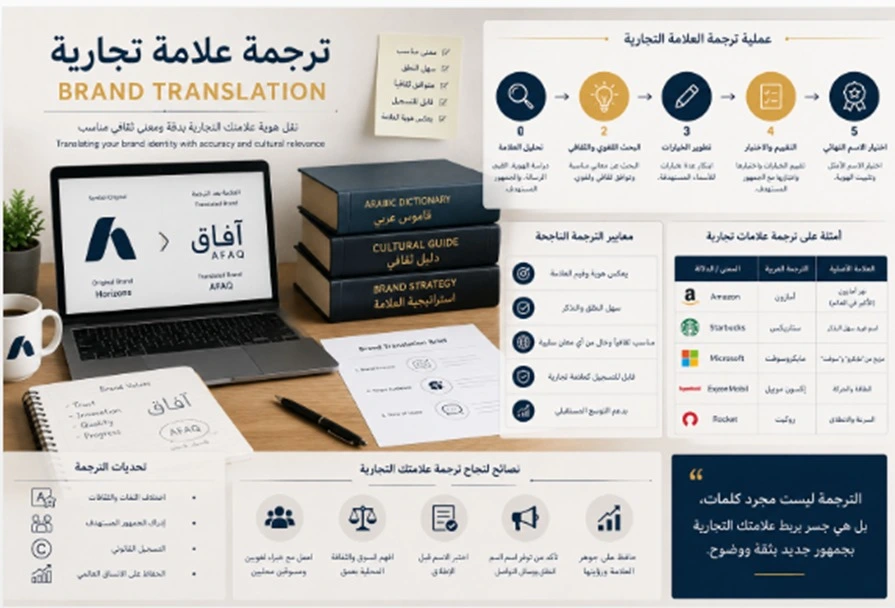
Arabic-English company document translation requires separating incorporation documents from administrative, operational, and marketing materials. Articles of incorporation or bylaws are not the same as a company profile. Board minutes are not the same as a quotation. An HR policy is not the same as a customer letter.
The Saudi Companies Law provides that a company’s articles of incorporation or bylaws shall be in Arabic and may be accompanied by a translation into another language. This point is particularly important for companies dealing with foreign partners or investors because it shows that a foreign-language version can be useful for communication and understanding without replacing the position of the Arabic version within the incorporation framework.
The Ministry of Commerce has also offered a service allowing companies to obtain an electronic English translation of incorporation contracts to facilitate communication with international markets and non-Arabic speakers. This means that before ordering an additional external translation, a company should first check whether the specific document can already be obtained officially in English.
Other company documents are different. Shareholder resolutions, board minutes, delegations, financial reports, and operational correspondence may require translation depending on the purpose and receiving authority. They should not all be treated as though they were incorporation documents.
Job titles are another major challenge. The Arabic word for “manager” may refer to a general manager, company manager, project manager, or another function depending on context. A chairman is not the same as a chief executive officer. Standardizing all titles without understanding the organization’s structure can create misunderstandings about authority.
The company’s legal form must also remain accurate. A limited liability company, joint stock company, and simplified joint stock company each have a different legal description. Shortening the entity type in a way that suggests a different corporate form should be avoided.
-
Before translating an incorporation document the company should check whether an official English version can already be obtained from the competent authority because using an official source when available is preferable to creating an unnecessary parallel version
-
Company types and management titles should be translated according to the legal form and actual organizational structure because changing the description of the entity or position can affect how authority is understood
-
Company documents should be divided into incorporation administrative operational and marketing groups before the project begins so each category receives the appropriate style and level of review
Arabic-to-English Agreement Translation
Arabic-to-English agreement translation requires understanding the difference between an agreement, contract, memorandum of understanding, and binding letter. The titles may sound similar, but the intended legal and commercial effect depends on the actual text.
A cooperation agreement, for example, may define the parties’ roles without creating an immediate obligation to purchase. A confidentiality agreement focuses on protected information, confidentiality duration, and exceptions. A distribution agreement deals with territory, products, pricing, and commercial rights. Translating every agreement using the same template would erase important distinctions.
Definitions are among the most important sections of any agreement. They are usually followed by scope of work, obligations, consideration, intellectual property, confidentiality, liability, term, termination, and dispute resolution. The order varies, but the translator should understand how the clauses relate to one another.
If an Arabic agreement will become bilingual, the language clause deserves special attention. Some agreements provide that both versions are equally authoritative, while others specify that one language prevails in case of inconsistency. The translator should never add or modify a language clause independently.
Commercial agency requirements in Saudi Arabia provide a practical example. The Ministry of Commerce requires an agreement that is not written in Arabic to be translated into Arabic by an approved translation office and requires the official name of the foreign company to appear in both Arabic and English without abbreviation or symbols. Such requirements demonstrate how names and language can directly affect the acceptance of an official transaction.
Accordingly, where an agreement with a foreign company uses a common abbreviated brand name, the project should distinguish between the commercial abbreviation and the full legal name whenever the official procedure requires the latter.
-
The type of agreement should determine its terminology and risk areas because confidentiality distribution cooperation and service agreements each have different priorities even when several clauses are shared
-
The language clause should not be created or changed during translation because it determines the relationship between the language versions in case of conflict and remains a contractual decision for the parties and their advisers
-
The foreign company’s full legal name should be recorded separately from any commercial abbreviation so the correct form can be used where an official procedure requires it
Arabic-English Commercial Translation

Arabic-English commercial translation differs from purely legal translation because it addresses business communication and persuasion in addition to accuracy. A company may need a commercial proposal, negotiation message, sales report, service description, or pricing document without needing a formal legal contract every time.
A commercial translator understands, for example, that the statement “our offer is valid for thirty days” contains a time condition that must remain clear. They understand that “price inclusive of tax” is different from “price before tax.” They also understand that an “expected delivery date” is not necessarily the same as a legally binding delivery deadline.
Commercial English should sound natural as well. Literal translation of lengthy Arabic courtesy expressions can produce an unnecessarily elaborate message. The goal is to maintain respect and commercial meaning while using wording that sounds natural to businesses operating in English.
Negotiation language is particularly sensitive. If the Arabic message says “we hope you will reconsider the price,” it should not be turned into a final rejection. If it states “this is our final offer,” the English version should not weaken that position into a tentative proposal. Tone is part of the transaction.
Prices and currencies need an independent review. The translator should not convert Saudi riyals into dollars without instruction and should not independently add tax or calculate discounts. If the table states one thousand Saudi riyals, the amount should remain one thousand Saudi riyals with the correct currency description.
For companies that translate commercial material frequently, an internal style guide can be extremely valuable. It can define whether the company prefers direct or formal language, how its name is written, how its services are named, and how departments are translated. This makes every English document sound as though it comes from one organization rather than from a different writer every time.
-
A commercial message should preserve the same negotiating strength so a flexible request does not become a rejection and a final position does not become language that appears open to negotiation
-
Prices currencies taxes and discounts should be transferred exactly from the source because the translator should not recalculate the commercial offer or change currency without a separate instruction
-
A terminology and style guide helps companies that translate regularly produce proposals messages and reports that remain consistent and sound as though they were prepared by one internal business team
Company Contract Translation into English
Company contract translation into English requires particular attention to the powers, responsibilities, and commercial obligations that arise between legal entities. A company’s agreement with a supplier is different from its agreement with a distributor, a technical service provider, or a commercial partner.
The first review should cover the names of the parties, the capacity of each party, the registered address, registration number where applicable, and the individual signing on behalf of the company. An error in the party’s capacity can make the English version appear as though an individual signed personally rather than in a representative corporate capacity.
The scope of the contract should then be reviewed. What exactly is the company purchasing or providing? What is expressly excluded from the scope? Ambiguity here can affect every clause that follows.
Payment provisions also need to be linked precisely to the event that triggers payment. Is payment made in advance, after delivery, after acceptance, or within a defined number of days from the invoice date? Changing the order of one sentence can shift the payment due date.
Limitations of liability, indemnities, and warranties are among the most sensitive parts of any agreement. A single generic English term should not be used for every type of compensation or liability when different clauses deal with different concepts. The same applies to force majeure and events beyond a party’s control. The terminology should serve the actual wording of the contract rather than rewriting the legal framework.
Franchise agreements are one example where the contract type directly affects translation requirements. Saudi Ministry of Commerce requirements provide that the franchise agreement must be in writing and signed and that where it is drafted in a language other than Arabic it must be translated into Arabic by a certified translator. The disclosure document is also subject to Arabic-language or certified-translation requirements when prepared in another language.
This is a practical example of why a contract translator needs to understand what type of contract is being translated rather than knowing only the language pair. Franchise requirements are not automatically identical to those of an ordinary service agreement.
-
The signatory’s title and authority to represent the company should appear clearly because confusing the individual with the company can alter the understanding of who is actually assuming the obligation
-
Payment terms should remain linked to the milestones invoices acceptance and delivery events stated in the source because a small shift in timing can accelerate or delay a significant financial obligation
-
Contracts governed by a specific framework such as franchise or commercial agency agreements require a translator who understands the requirements of that contract type rather than applying one generic contract template to every transaction
Certified Arabic-English Translation Office

Choosing a certified Arabic-English translation office for contracts and commercial documents begins with specialization rather than price alone. An office that spends most of its time translating personal certificates is not automatically the best choice for a seventy-page distribution agreement containing price schedules, liability provisions, and intellectual property clauses.
Proper licensing matters. The government service for licensing commercial translation offices and centers requires details about translators, languages, fields, and specializations. This gives clients something practical to verify instead of relying only on advertising phrases such as “certified office.”
The next question is how the office works. Is there a lead translator and an independent reviewer? Does the team create a terminology glossary? Can it manage amendments and revised versions? Is there a clear process for identifying the latest contract version?
Version control is extremely important. Commercial agreements often go through five, ten, or more rounds of negotiation. If the office translates version three and later receives amendments from version five without proper tracking, an old clause can accidentally return to the final agreement.
Confidentiality is another essential standard. Merger, investment, supply, and technology agreements can contain trade secrets and unpublished commercial information. A good office limits access to the people who actually need the file and uses a clear process for storing and delivering documents.
Pricing depends on word count, document type, technical complexity, source-file quality, bilingual formatting, independent review, and urgency. Two quotes should therefore not be compared only on a per-page rate when one includes independent review and terminology management while the other covers only a first draft.
A professional translation office should also never claim to “guarantee that the contract is legally valid.” It can guarantee the quality and fidelity of its translation within its scope, but assessing the legal enforceability of the agreement belongs to qualified legal counsel.
-
Ask the office about the translation team independent reviewer terminology glossary and version-control process before focusing on price because lengthy commercial agreements require a structured workflow more than they require a fast individual translator
-
Proper licensing and specialization provide a better indication of suitability than general marketing descriptions such as the best or most certified when no verifiable information supports those claims
-
Price differences should be compared together with the service scope because first-draft translation independent review formatting and amendment management are not equivalent services even when the page count is identical
Commercial Correspondence Translation into English
Commercial correspondence translation into English requires accuracy of tone just as much as accuracy of meaning. An email requesting payment of an invoice is not the same as a formal notice of delay. A message opening negotiations is not the same as an official termination notice.
The first step is understanding the relationship between the parties. Is the sender writing to a long-standing supplier, a new partner, a bank, a government authority, or an investor? The level of formality should then be selected accordingly.
Commercial correspondence often refers to earlier contracts, invoice numbers, purchase orders, and deadlines. These details should be checked against the related documents. If a delay notice says an invoice was due on September 15 while the underlying contract provides a different deadline, the letter should be translated faithfully, but the client should preferably be alerted to the inconsistency rather than having the translator silently alter it.
Reservation-of-rights language is also important. Expressions equivalent to “without prejudice to our rights” are not decorative courtesies. “We reserve all our rights” carries commercial and legal significance. The same applies where a company states that a response “does not constitute acceptance of the amendment.” Such expressions require careful translation because they protect the sender’s position.
Negotiation correspondence should use natural English rather than word-for-word rendering. A long Arabic sentence may reasonably become two shorter English sentences without changing meaning. The important point is not to add an obligation, apology, waiver, or concession that did not exist in the original.
Where correspondence is addressed to a Saudi government authority by a foreign company, the official policy supporting the use of Arabic in communication with government bodies should also be considered. Saudi Arabia’s 2026 National Arabic Language Policy reaffirmed this direction within the broader framework governing the use of Arabic in public-sector communication.
In some cases, the company may therefore need both language versions rather than an English version alone.
-
The tone of the message should reflect its actual purpose because a negotiation request follow-up message breach notice and formal warning each carry a different level of seriousness
-
Contract numbers invoice references purchase orders and dates should be checked against the documents referred to in the correspondence so the English message does not become the source of information that conflicts with the commercial file
-
Reservation-of-rights refusal and non-waiver language should be translated carefully because these expressions can form an essential part of the company’s position rather than being optional phrases that can be removed for style
Conclusion
Certified Arabic-English translation for contracts and commercial documents requires building an entire translation system around the transaction rather than translating isolated pages. The process begins by identifying the document type, receiving authority, and controlling language, then standardizing company names, terminology, figures, and dates before moving to translation, review, and version management.
Arabic has a clear regulatory importance in a number of Saudi commercial documents. The Companies Law provides that articles of incorporation or bylaws are prepared in Arabic and may be accompanied by a translation into another language. Commercial agency and franchise procedures include situations where an approved Arabic translation is required when the original document is in another language. Commercial translation offices themselves are also subject to an official licensing framework that records translator information, languages, and fields of specialization.
Professional translation, however, does not stop at the office stamp. A strong contract needs consistent terminology, correct figures, matching dates, precise verbs of obligation, and a final version free from internal contradictions. A strong commercial document also needs natural language suitable for clients, partners, and investors without becoming unnecessarily heavy legal prose.
Before sending fifty files and describing all of them as “commercial,” classify them first. A contract, agreement, invoice, business letter, and quotation each have a different purpose. A company that controls its figures and terminology from the beginning usually saves itself a long round of questions later—especially the familiar one: “Why does the English version say something different?”
Frequently Asked Questions
What does certified Arabic-English translation mean?
It means preparing a translation according to the intended use and receiving authority while the translation provider assumes responsibility for matching the translated version to the source within the scope of the service. It does not mean the translator can change the agreement or guarantee the receiving authority’s decision.
Are translation offices in Saudi Arabia officially licensed?
Yes. Saudi Arabia has a government licensing service for commercial translation offices and centers that includes registration of translators, languages, fields, and specializations offered by the office.
Must every contract in Saudi Arabia be written in Arabic?
Not every private contract is governed by exactly the same requirement. The answer depends on the type of contract, the applicable legal framework, and the receiving authority, although certain regulated documents and procedures specifically require Arabic or a certified Arabic translation.
Are company incorporation documents required to be in Arabic?
The Saudi Companies Law provides that articles of incorporation or bylaws are prepared in Arabic and may be accompanied by a translation into another language.
Can I obtain an official English version of a company incorporation contract?
The Ministry of Commerce has offered an electronic service for obtaining an English translation of company incorporation contracts, so it is worth checking whether an official version is available before ordering a separate external translation.
Does a foreign commercial agency agreement need an Arabic translation?
Saudi Ministry of Commerce requirements for commercial agency registration provide that an agreement not drafted in Arabic must be translated into Arabic by an approved translation office.
Does a franchise agreement need a certified translation?
Where a franchise agreement is drafted in a language other than Arabic, current service requirements provide for its translation into Arabic by a certified translator. Similar Arabic-language or certified-translation requirements can also apply to the disclosure document.
Does the English version of a contract automatically become the controlling version?
No. The controlling or prevailing language is determined by the contract wording and the applicable legal framework. The translator should not decide this independently.
Can the translator change a clear clause because it is commercially unsuitable?
No, not as part of translation. Changing rights, obligations, periods, or commercial terms requires an amendment agreed by the parties rather than a linguistic decision by the translator.
What are the most important elements to review in a contract?
Party names and capacities, definitions, scope of work, amounts, currencies, dates, term, renewal, termination, liability, warranties, confidentiality, governing law, and dispute resolution are among the areas that require particularly careful review.
Is “may” the same as “shall” in legal English?
No. “May” generally expresses discretion or permission, while “shall” is commonly used to express an obligation. Changing the level of obligation is one of the most serious contract-translation errors.
Is legal translation the same as legal advice?
No. A translator transfers the legal and commercial meaning accurately, while assessing whether a clause is legally valid or compliant or recommending amendments belongs to qualified legal advisers.
Should company names be translated?
If the company has an official English name, that form should normally be used. If no official English name exists, the selected form should remain consistent throughout the file rather than changing from one document to another.
Should a company’s commercial abbreviation be translated?
An official abbreviation can be preserved where appropriate, but some procedures require the full legal company name. The abbreviation should therefore not replace the full legal name where the latter is required.
Are currencies converted during translation?
Not automatically. Amounts and currencies should remain exactly as stated in the source. Currency conversion requires a separate instruction and an agreed reference date and exchange-rate source.
Does the translator recalculate taxes or discounts?
No. The translator reproduces figures and percentages from the source and should not independently recalculate a commercial offer unless that task has been separately and clearly commissioned.
What is the difference between contract translation and commercial correspondence translation?
A contract requires particularly strict preservation of rights and obligations, while commercial correspondence additionally requires careful control of tone, negotiating position, and the relationship between the parties.
Do quotations require the same style as legal contracts?
No. A quotation needs clarity regarding price, scope, validity, delivery, and payment terms, but it usually uses more direct commercial language than a lengthy legal agreement.
Is invoice translation the same as contract translation?
No. An invoice focuses on information about a financial transaction such as seller, buyer, goods or services, amounts, tax, and date, while a contract regulates a broader set of rights and obligations.
Do all commercial documents require certified translation?
Not necessarily. Certification depends on the receiving authority and intended use. Some documents are used internally between businesses, while others are submitted to official authorities and are subject to specific requirements.
Can the same defined term be translated in several different ways within one contract?
It is generally better to avoid doing so, particularly for formally defined terms, because changing the English equivalent without a reason can suggest that more than one legal concept is intended.
How should contract amendments be handled after translation?
A clear version-control process should be used so that only new amendments are introduced and their impact on definitions, cross-references, schedules, and other clauses is reviewed before the final version is issued.
Can a translation office guarantee that a contract is legally valid?
No. The office can guarantee the quality of the translation within its professional scope, while legal validity and regulatory compliance require qualified legal counsel.
How do I choose a certified Arabic-English translation office?
Choose an office with appropriate licensing and proven experience in your document type that uses a translator and reviewer, standardizes terminology, manages versions confidentially, and explains the limits of its service clearly.
How much does Arabic-English contract translation cost?
Pricing varies according to word count, specialization, contract length, number of annexes, formatting complexity, independent review, and turnaround time. Quotes should therefore not be compared only by page count without comparing the actual service scope.
Do bilingual contracts require additional review?
Yes. They should be reviewed clause by clause to confirm consistency between the two language versions, figures, definitions, cross-references, and controlling-language provisions, and to ensure that no clause appears in one version but not the other.
What should I send to the translation office before the project begins?
Send the final editable version where possible together with all annexes, identify the purpose and receiving authority, provide any previously approved translations of company names and terminology, and explain whether you need translation only or a complete bilingual contract format.
Need Help?
Contact us directly via WhatsApp and we will reply as soon as possible.
More Articles
Certified French-Arabic Translation for Saudi Official Documents
Certified French-Arabic translation in Saudi Arabia for certificates and official documents, with accurate names, dates, seals, notes, and reliable files.
Read Article → Official Document Translation in Saudi Arabia with Guaranteed Government AcceptanceCertified Turkish-Arabic Translation for Business and Personal Use
Certified Turkish-Arabic translation in Saudi Arabia for business and personal documents, with accurate names, dates, numbers, data, and official records.
Read Article → Certified Online Translation in Saudi Arabia Delivery Within 24 HoursChinese-Arabic Translation for Companies, Contracts, and Catalogs
Chinese-Arabic translation for companies, contracts and catalogs in Saudi Arabia, with accurate terms, product names, models, specs, and business files.
Read Article →