
Literal Translation vs Brand Localization
Discover the difference between literal translation and brand localization, and learn which approach drives stronger branding in Saudi Arabia
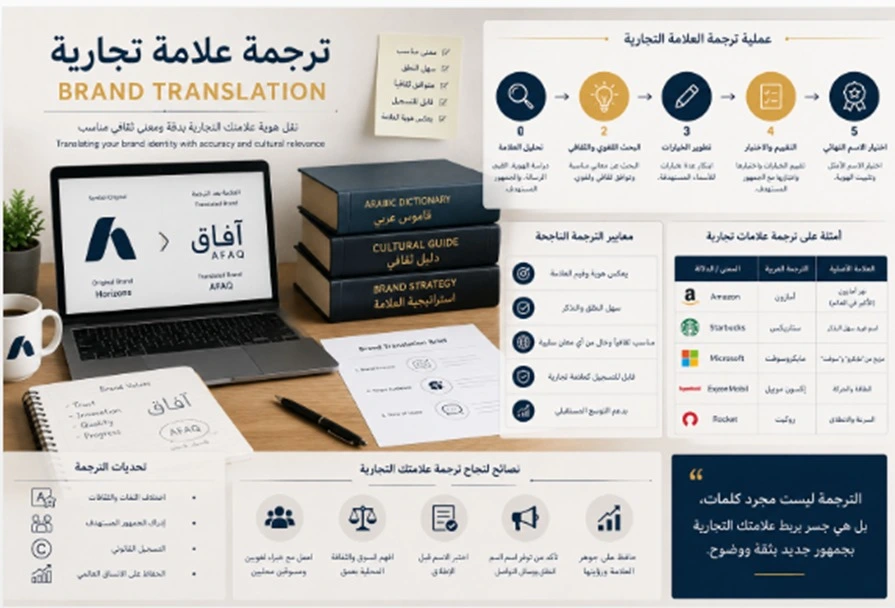
When companies enter new markets, one of the most important challenges they face is determining how to transfer their brand name and identity in a way that preserves brand value while increasing the ability to connect with local audiences. At this stage, many business owners make a common mistake by assuming that literal translation alone is sufficient. The reality is completely different because brands are not built on words alone. They are built on impressions, values, emotions, and experiences that customers associate with them. For this reason, understanding the difference between literal translation and brand localization has become essential for any company seeking to build a strong and sustainable presence in the Saudi market while achieving better marketing results over the long term.
The Difference Between Literal Translation and Localization
Understanding the difference between literal translation and localization is one of the most important concepts companies should grasp before launching their brands in new markets. Literal translation focuses on transferring words or direct meanings from one language to another without considering the cultural or marketing context associated with them. Localization, on the other hand, focuses on adapting the name or message so that it becomes suitable for the target audience while preserving the essence of the brand.
Through numerous brand identity development projects, it becomes clear that names relying on literal translation often face challenges related to clarity, customer acceptance, and emotional connection with audiences. In contrast, professionally localized names tend to achieve better results because they take into account market characteristics, audience expectations, and local consumer behavior.
The difference between literal translation and localization is also clearly reflected in marketing performance. A literally translated name may successfully transfer the linguistic meaning, but it often fails to communicate the marketing value or strategic message that the brand originally intended to deliver. Localization seeks to preserve the same impact and perception even if this requires modifying wording or selecting alternatives that are more suitable for the target market.
For this reason, companies that understand this distinction from the beginning are better positioned to build brands capable of competing and growing successfully in new markets.
• Literal translation transfers words while localization transfers value
• Localization considers local culture and customer behavior
• Direct translation may weaken marketing messages
• Localization aims to preserve impact and perception
• Professionally localized names achieve stronger market acceptance
Brand Localization
Brand localization differs from traditional translation because it deals with a strategic marketing asset that represents a company’s identity and reputation. A brand is not simply a name. It is a collection of values, perceptions, and experiences that accompany customers throughout their interactions with the business.
The localization process begins by studying the original brand name and analyzing the messages associated with it. Specialists then evaluate how effectively these messages align with the new market environment. Based on this analysis, solutions are developed to present the brand in a way that resonates more effectively with local audiences while maintaining its core personality and positioning.
Real-world examples from the Saudi market demonstrate that many international brands have achieved remarkable success because they adopted carefully planned localization strategies instead of relying solely on direct translation. These strategies enabled them to build stronger trust, higher engagement, and deeper customer relationships.
Brand localization also contributes to improved digital marketing performance, increased memorability, and stronger brand recognition. As a result, localization has become a fundamental component of regional and international expansion strategies for many organizations.
• Studying brand identity before localization
• Preserving the core values of the brand
• Increasing acceptance within the Saudi market
• Improving opportunities for engagement and visibility
• Supporting growth and expansion objectives
Translating Commercial Names
Translating commercial names is one of the most sensitive stages in brand development because mistakes made during this process can affect brand perception for many years. The commercial name is often the first element customers encounter, and it plays a major role in shaping their initial impression of the company.
The challenge arises when organizations treat commercial name translation as a purely linguistic task when it is actually a strategic process that requires an understanding of marketing, culture, and consumer behavior. A successful name is not merely linguistically accurate. It must also communicate effectively, create differentiation, and inspire confidence among customers.
Commercial name translation should also involve practical testing before final approval. A name that appears effective in internal discussions may encounter challenges when used in advertising campaigns, search engines, or social media platforms. Early evaluation helps companies avoid costly revisions and branding challenges later.
Marketing experience consistently shows that names translated through a strategic process perform significantly better than names created through literal or rushed translation methods.
• Treating commercial names as marketing tools
• Testing names before official launch
• Evaluating customer reactions and perceptions
• Improving differentiation from competitors
• Creating strong and positive first impressions
Marketing Translation for Brands
Marketing translation for brands differs from conventional translation because it focuses less on words and more on the impact those words create in the minds of customers. The objective of marketing translation is not simply to transfer content from one language to another but to transfer emotions, values, and messages that help the brand establish meaningful relationships with its audience.
In many international projects, the importance of marketing translation becomes apparent when organizations attempt to enter markets that differ culturally and linguistically from their original markets. In these situations, success depends not only on linguistic accuracy but also on the ability of the message to persuade customers and encourage engagement with the brand.
Marketing translation also relies on studying customer behavior and understanding audience expectations. This often requires adapting certain concepts, phrases, or naming elements to ensure that the intended impact is achieved within the target market. As a result, marketing translation functions as a strategic marketing activity rather than a purely linguistic exercise.
Practical experience demonstrates that companies investing in professional marketing translation achieve stronger brand awareness, greater customer engagement, and improved conversion rates compared with organizations that rely on direct translation methods.
• Focusing on impact rather than words alone
• Communicating marketing messages effectively
• Strengthening relationships between brands and customers
• Improving campaign performance
• Increasing success in new markets
Localization of Global Brands
The localization of global brands is one of the most complex tasks within branding because international brands possess histories, reputations, and market values that must be preserved while adapting to local markets. The objective of localization is therefore not to change the identity of the brand but to present it in a way that makes it more relevant and accessible to local audiences.
The process begins by analyzing the core elements that distinguish the global brand and evaluating how well they fit within the local cultural environment. Solutions are then developed to preserve the brand’s personality while enhancing its ability to connect with target customers.
Successful localization of global brands depends on achieving a balance between local relevance and international identity. Excessive localization may weaken the brand’s global value, while insufficient localization may reduce its ability to build meaningful customer relationships in the target market.
Professional localization enables global brands to achieve stronger market penetration in Saudi Arabia without sacrificing their core values, positioning, or international reputation.
• Preserving the global value of the brand
• Strengthening connections with local audiences
• Balancing international identity with local relevance
• Supporting regional expansion strategies
• Increasing acceptance and market visibility
Translating Brand Identity
Translating brand identity goes far beyond translating the name itself. It includes every element that shapes the image of the brand in the minds of customers. These elements include marketing messages, core values, slogans, visual identity, communication style, and the overall experience associated with the brand.
When brand identity translation is handled correctly, the brand becomes more capable of presenting itself to a new audience in a consistent and persuasive manner. However, when companies focus only on translating the name while ignoring the other components of the identity, a gap often emerges between what the brand promises and what customers actually understand.
Brand identity translation also requires a deep understanding of local culture to ensure that messages are communicated in a way that preserves both their meaning and emotional impact. For this reason, successful companies do not translate identity elements individually. Instead, they create a unified and integrated brand experience that remains consistent across all customer touchpoints.
Practical experience consistently demonstrates that professionally translated brand identities help build trust, improve customer experiences, and strengthen overall brand performance within competitive markets.
• Translating all brand identity elements rather than focusing solely on the name
• Preserving core messages and brand values
• Creating a consistent customer experience
• Strengthening trust and clarity
• Enhancing the overall image of the brand
Literal Translation Mistakes
Literal translation mistakes are among the most common reasons why brands struggle to succeed in new markets. Although literal translation may accurately transfer the linguistic meaning of words, it frequently fails to transfer the marketing significance, emotional appeal, and cultural relevance associated with a brand name or message.
One of the most common mistakes involves selecting words that are technically correct but unfamiliar to the target audience or associated with meanings that differ from the intended message. Some literally translated names also lose their appeal and become less distinctive compared with competing brands.
Literal translation mistakes become even more problematic when local market expectations and customer preferences are ignored. A name that performs successfully in one country may require substantial adaptation before it can achieve similar results in another market with different cultural characteristics.
For this reason, relying solely on literal translation represents a significant risk for companies seeking to build strong and sustainable brands in competitive environments.
• Losing the marketing power of names and messages
• Creating unintended meanings and associations
• Reducing differentiation from competitors
• Ignoring cultural characteristics of the market
• Lowering the probability of long-term success
Choosing the Right Commercial Name
Choosing the right commercial name is one of the most important decisions affecting the future of a brand from the moment it enters the market. A commercial name is not merely a way to identify a business. It is a critical element in building trust, creating first impressions, and strengthening competitive differentiation.
The process begins with understanding the nature of the business, identifying the target audience, and defining the messages that the brand wants to communicate. Competitor analysis is also essential because it helps companies avoid similarity and create names with unique and recognizable personalities.
Marketing experience shows that successful names tend to be clear, memorable, easy to pronounce, and flexible enough to support future expansion. Effective names allow brands to grow without becoming restricted by overly narrow descriptions of products or services.
For this reason, choosing the right commercial name requires a combination of creativity, strategic thinking, market research, and customer understanding rather than relying solely on intuition or personal preferences.
• Studying the target audience before naming decisions
• Analyzing competitors and opportunities for differentiation
• Selecting names that are memorable and easy to pronounce
• Supporting future growth and expansion
• Creating powerful and positive first impressions
Branding for the Saudi Market
Branding for the Saudi market requires a deep understanding of local culture, consumer behavior, and market expectations. Building a successful brand in Saudi Arabia depends not only on product quality or service excellence but also on the ability of the brand to communicate with customers in a way that reflects their values and expectations.
For this reason, branding strategies designed for the Saudi market focus on developing names, messages, and visual identities that align with local preferences while maintaining professionalism and competitive strength. Particular attention is given to trust, clarity, and ease of communication because these factors play a major role in purchasing decisions.
Analysis of successful brands operating in Saudi Arabia reveals that many have achieved strong growth by adapting their identities to local market conditions without sacrificing innovation or differentiation. This balance has allowed them to build loyal customer bases and achieve broad market recognition.
Branding for the Saudi market is not a one-time activity. It requires continuous improvement and adaptation to evolving customer expectations and changing market conditions to maintain long-term competitiveness.
• Understanding local culture and consumer behavior
• Developing identities suitable for the Saudi market
• Strengthening credibility and trust
• Supporting visibility and customer loyalty
• Maintaining long-term competitive advantages
Creative Brand Translation
Creative brand translation represents the most advanced approach compared with literal translation and even many traditional localization methods. The objective is not merely to transfer a name or message but to recreate it in a way that preserves the same emotional impact and strategic value achieved by the original brand.
Creative brand translation relies on a deep understanding of brand identity, brand values, and the emotional responses the brand seeks to generate among customers. Based on this understanding, specialists develop linguistic and marketing solutions that communicate these elements effectively to new audiences.
This approach allows organizations to move beyond the limitations of direct translation. Certain terms may be adapted, messages may be restructured, and entirely new naming solutions may be developed while preserving the spirit and personality of the original brand.
For this reason, global organizations and ambitious brands increasingly rely on creative brand translation because it provides greater flexibility, stronger customer engagement, and more effective market adaptation.
• Prioritizing impact over direct translation
• Preserving the spirit and personality of the brand
• Developing solutions tailored to target markets
• Strengthening marketing communication
• Enhancing customer experiences with the brand
Conclusion
The difference between literal translation and brand localization demonstrates that success in new markets depends on much more than transferring words from one language to another. Literal translation may be appropriate for general content, but it is rarely sufficient when dealing with commercial names, brand identities, and marketing communication. Successful companies therefore rely on professional localization, marketing translation, and creative brand adaptation to preserve brand strength while improving their ability to connect with customers. The more effectively a brand name and identity align with the Saudi market, the greater the opportunities for growth, visibility, customer trust, and long-term success.
Frequently Asked Questions
What is the main difference between literal translation and brand localization?
Literal translation focuses on transferring direct meanings and words, while localization focuses on transferring the cultural, emotional, and marketing value of a brand in a way that suits the target market.
Can literal translation cause brand failure?
Yes. In some cases, literal translation can create inappropriate meanings or weaken the marketing impact of a name, reducing the likelihood of brand success.
Why do brands need marketing translation?
Marketing translation helps transfer messages, values, and emotions associated with a brand in a way that resonates more effectively with local audiences.
Why is localization important for global brands?
Localization helps strengthen connections with local customers while preserving the international identity and value of the brand.
How can I choose a commercial name suitable for the Saudi market?
By studying the target audience, analyzing competitors, selecting a memorable and clear name, and ensuring that it supports the brand’s long-term objectives.
What is creative brand translation?
Creative brand translation involves adapting names and marketing messages in a way that preserves the original impact of the brand while making it relevant to a new market.
Does branding influence business success in Saudi Arabia?
Absolutely. Strong branding helps build trust, strengthen brand perception, increase competitiveness, and improve visibility within the Saudi market.
Need Help?
Contact us directly via WhatsApp and we will reply as soon as possible.
More Articles
Research Hypothesis Testing and Choosing the Right Statistical Test
Research hypothesis testing and statistical test selection based on variable type and study design, with accurate interpretation of significance, effect size, and results.
Read Article → Data ProcessingCronbach's Alpha Reliability Testing and Result Interpretation
Cronbach’s alpha reliability testing with internal consistency analysis, item review, result interpretation, and clear limits for use in academic research.
Read Article → Statistical AnalysisSurvey Data Coding and Preparation for Statistical Analysis
Survey data coding and preparation for statistical analysis, including variable definitions, missing data, reverse-coded items, data cleaning, and organized research datasets.
Read Article →