
Brand Translation Mistakes That Hurt Success
Discover common brand translation mistakes and how to avoid them to build a strong brand name that succeeds in the Saudi market.
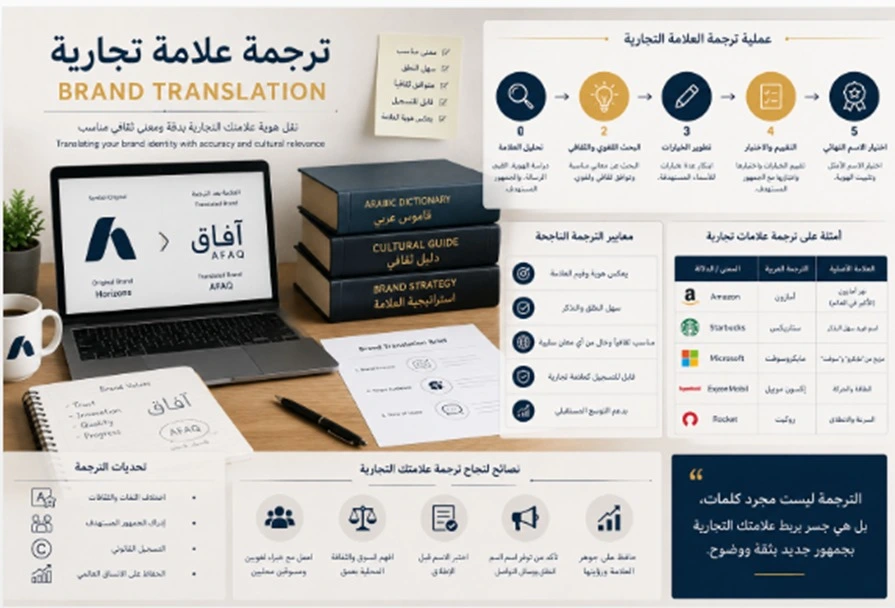
Brand translation is one of the most sensitive stages in the process of building a brand and expanding into new markets because a brand name is not merely a way to identify a business activity. It is one of the most valuable marketing assets that influences a company’s image, customer trust, and first impressions. Despite the importance of this stage, many organizations make brand translation mistakes because they rely on literal translation, ignore the characteristics of the target market, or make rushed decisions without sufficient research. These mistakes can sometimes lead to weak market penetration, declining sales, or even brand failure after translation. For this reason, understanding the most common mistakes and learning how to avoid them has become essential for building a strong and competitive brand within the Saudi market.
Brand Translation Mistakes
Brand translation mistakes occur when a brand name is treated solely as a linguistic element rather than a marketing asset with cultural and strategic value. Many companies focus on transferring the meaning of a name or its pronunciation while overlooking the impression that the translated name may create among customers in the target market. As a result, names may appear linguistically correct while failing to establish a meaningful connection with the audience.
Through practical experience in brand redevelopment projects, it becomes clear that some translated names create confusion among customers because they are difficult to pronounce or because they carry meanings that do not align with local cultural expectations. In other situations, a brand loses part of its identity because the selected translation fails to communicate the message that the original brand intended to deliver.
Brand translation mistakes can also affect future marketing campaigns because the translated name becomes less memorable and less effective at building trust. Over time, some organizations are forced to rename their brands or redesign their identities completely, creating additional costs that could have been avoided through proper planning at the beginning.
For this reason, professional brand translation depends not only on language expertise but also on understanding the market, the audience, the competition, and the nature of the business itself.
• Relying on literal translation without market research
• Ignoring the marketing value of the brand name
• Weakening brand identity during the translation process
• Choosing names that are difficult to remember or pronounce
• Increasing the likelihood of future rebranding efforts
Commercial Name Localization Mistakes
Commercial name localization mistakes are among the most common problems faced by companies entering the Saudi market for the first time. Many organizations assume that converting a name into Arabic is sufficient for success, while the reality is that localization requires a much deeper process than simply changing words or letters.
One of the most frequent mistakes involves selecting a phonetic adaptation without evaluating how the localized name will be perceived by local audiences. A name may sound appropriate in its original language but acquire undesirable meanings or associations after localization. In addition, some organizations choose long or complicated names that reduce memorability and make everyday usage more difficult.
Commercial name localization mistakes also occur when businesses ignore the nature of the target industry. A name suitable for a technology company may not be effective for businesses operating in hospitality, education, healthcare, or professional services. Successful localization must therefore consider both the business sector and the characteristics of the intended audience.
Marketing experience consistently demonstrates that names localized through careful research and testing achieve higher levels of acceptance and recognition than names adopted without analysis or validation.
• Selecting localized names that conflict with local culture
• Using overly complicated or lengthy names
• Ignoring the nature of the business activity
• Failing to test the name before launch
• Reducing trust and positive customer perception
Brand Failure After Translation
Brand failure after translation can often be traced back to a series of poor decisions made during the translation or localization process. Even organizations offering excellent products and services may struggle if they fail to present a name and identity that resonate with the new market.
In some situations, a translated brand loses its ability to stand out because the new name resembles competitor brands or because the message behind the name lacks clarity. Customers may find the name difficult to understand or remember, reducing the effectiveness of marketing campaigns and negatively affecting conversion rates and sales performance.
Analysis of numerous marketing cases shows that brand failure after translation is rarely caused by the quality of the product itself. More often, it is linked to how the brand is presented to the market. The brand name serves as the first gateway through which customers enter the brand experience. If that gateway is unclear or unattractive, the probability of success declines significantly.
Investing in professional translation and localization from the beginning helps reduce the risks associated with entering new markets and greatly improves the likelihood of building a strong and sustainable brand presence.
• Weak differentiation from competitors
• Difficulty remembering or understanding the name
• Reduced effectiveness of marketing campaigns
• Lower trust among potential customers
• Lost opportunities for growth and expansion
Translating a Commercial Name Incorrectly
Incorrect commercial name translation occurs when businesses focus exclusively on the direct linguistic meaning of a name while ignoring the marketing message that the brand is intended to communicate. Many global brands are built around emotional concepts, symbolic values, and customer experiences rather than the literal meaning of individual words. When names are translated directly, they often lose a significant portion of their influence and appeal.
One common mistake is translating the words that make up the name instead of translating the idea behind the name. This often results in names that appear unusual or disconnected from the nature of the business itself. In other cases, translations may be linguistically accurate while providing little marketing value or emotional impact for the target audience.
The problem becomes even more serious when organizations approve names without testing them among potential customers. Many businesses discover after launch that customers struggle to understand, pronounce, or remember the translated name, leading to weaker marketing performance and lower customer engagement.
For this reason, successful commercial name translation requires a combination of linguistic expertise, marketing knowledge, and cultural understanding to achieve the best possible outcome.
• Focusing on literal meaning instead of marketing value
• Losing the original brand message
• Reducing customer appeal and engagement
• Ignoring market testing before launch
• Lowering marketing effectiveness
Challenges of Brand Localization
Brand localization challenges frequently emerge when localization is performed without sufficient research into the target audience or the characteristics of the intended market. Successful localization is not simply about finding an Arabic equivalent for a name. It is about creating an identity capable of connecting with customers and building trust from the very beginning.
Among the most common challenges are names that acquire unintended meanings after localization or names that are difficult for customers to use in daily communication. Some brands also struggle because excessive localization separates the name from its original identity and weakens the connection to its global heritage.
Brand localization challenges also extend into digital marketing. A name that appears suitable in theory may create difficulties in search engine visibility, online advertising, and social media marketing. These challenges can reduce the effectiveness of promotional efforts and limit market reach.
Experience الfrom successful localization projects demonstrates that solving these challenges begins during the planning and analysis stage rather than after the brand has already been introduced to the market.
• Creating unintended meanings after localization
• Weakening connections to the original brand identity
• Causing difficulties in digital marketing efforts
• Reducing customer acceptance of the localized name
• Creating the need for costly modifications after launch
Common Branding Mistakes
Common branding mistakes are not limited to logo design or visual identity issues. They also include the way names are selected, translated, localized, and presented to customers. A brand identity functions as a complete system, and weakness in one component can negatively affect the overall perception of the brand.
One of the most frequent mistakes is relying on personal preferences when selecting a name instead of using research, customer insights, and market analysis. Some organizations also make the mistake of directly imitating competitors, which reduces differentiation and makes it difficult to establish a unique identity in the marketplace.
Common branding mistakes also include inconsistencies between the brand name and marketing messages or between the name and the actual nature of the business. When these inconsistencies occur, customers may become confused about what the company stands for and what value it offers. This confusion weakens trust and reduces the effectiveness of marketing efforts.
For this reason, successful branding requires treating the name as a strategic business asset that influences every aspect of communication with customers rather than viewing it as a purely creative or aesthetic decision.
• Relying on personal opinions instead of market analysis
• Directly copying competitor naming strategies
• Creating inconsistencies between the name and brand identity
• Ignoring the expectations of the target audience
• Weakening the ability to build a distinctive brand
Choosing a Name Unsuitable for the Saudi Market
Choosing a name that is unsuitable for the Saudi market is one of the mistakes that can directly affect the success of a brand regardless of the quality of the products or services offered. The Saudi market has unique cultural, linguistic, and behavioral characteristics that must be considered during the naming process.
In some situations, businesses select names that are difficult to pronounce, difficult to remember, or associated with meanings that do not fit the local environment. Other names may appear excessively foreign, making it more difficult for customers to build a strong emotional connection with the brand.
Another common issue involves choosing names that are overly generic and fail to distinguish the brand from competitors. On the other hand, names that are too narrow or overly specialized can limit future growth and expansion opportunities. A successful name must therefore combine clarity, flexibility, and professionalism.
Marketing experience consistently demonstrates that selecting a name suitable for the Saudi market improves visibility, strengthens customer trust, and enhances the effectiveness of promotional campaigns.
• Considering local culture during the naming process
• Selecting names that are easy to pronounce and remember
• Avoiding generic or overly complicated names
• Supporting future business expansion
• Increasing customer acceptance and trust
Marketing Translation Mistakes
Marketing translation mistakes are among the most common reasons why brands struggle to create impact in new markets. Marketing translation is not about transferring words from one language into another. It is about transferring emotions, values, and messages in a way that resonates with the target audience. When marketing content is treated as ordinary text, much of its persuasive power is lost.
One of the most common mistakes involves translating marketing slogans literally without considering cultural context or consumer psychology. Some phrases may carry strong positive associations in one market while producing little impact or even negative reactions in another.
Marketing translation mistakes also occur when businesses fail to understand the specific needs and expectations of local customers. Effective marketing messages make customers feel understood and valued. When this connection is missing, even high-quality products and services may struggle to achieve strong results.
Professional marketing translation therefore requires expertise in marketing strategy, consumer behavior, and cultural adaptation in addition to linguistic skills.
• Translating marketing messages literally without adaptation
• Losing emotional impact and persuasive power
• Ignoring cultural differences between markets
• Reducing the effectiveness of customer communication
• Weakening advertising campaign performance
Impact of a Brand Name on Sales
The impact of a brand name on sales is often much greater than many business owners realize because the name represents the first interaction between customers and the brand. In many situations, customers decide whether to explore a product further or ignore it based solely on the impression created by the name.
Marketing experience consistently shows that clear, memorable, and trustworthy names achieve higher levels of engagement and stronger sales performance than names that are confusing or difficult to understand. Customers naturally gravitate toward brands that feel familiar, professional, and easy to remember.
A brand name also influences digital marketing performance and online visibility. Appropriate names improve brand awareness, support search performance, and increase customer engagement. Weak names, on the other hand, may reduce visibility and make it more difficult to attract attention in competitive markets.
Analysis of numerous branding projects demonstrates that a name influences every stage of the customer journey, from initial awareness to purchase decisions and long-term loyalty.
• Creating the first impression among potential customers
• Increasing memorability and brand recognition
• Supporting advertising and marketing campaigns
• Improving digital visibility and engagement
• Contributing directly to higher sales performance
Improving Brand Translation
Improving brand translation begins with understanding that the objective is not simply to translate words but to create a complete experience that brings the brand closer to its target audience. Continuous improvement requires research, testing, evaluation, and adaptation rather than relying on quick solutions.
The improvement process often includes reviewing the performance of the current name, analyzing customer feedback, and evaluating how effectively the name supports brand objectives. Competitor comparisons are also important because they help determine whether the name provides adequate differentiation within the market.
Working with specialists in branding and marketing translation makes it easier to identify weaknesses before they become major obstacles. Some brands require only minor refinements, while others benefit from more substantial adjustments to names, messaging, or identity elements.
For this reason, improving brand translation should be viewed as an ongoing process designed to ensure that the brand remains aligned with changing customer expectations, market trends, and competitive conditions.
• Reviewing name performance regularly
• Analyzing customer reactions and feedback
• Comparing the name against competitors
• Making improvements based on real data
• Strengthening long-term brand growth and success
Conclusion
Brand translation mistakes are among the primary factors that can limit the success of organizations entering new markets, even when they offer outstanding products or services. Choosing a name that is unsuitable for the Saudi market, making marketing translation errors, or ignoring branding principles can result in reduced visibility, lower sales, and weaker customer trust. Investing in professional translation and carefully planned brand localization helps organizations avoid these challenges while improving opportunities for sustainable growth, stronger recognition, and long-term success within the Saudi market.
Frequently Asked Questions
What are the most common brand translation mistakes?
The most common mistakes include relying on literal translation, ignoring local culture, and failing to test the translated name before launching it in the market.
Can incorrect localization of a commercial name lead to brand failure?
Yes. A commercial name significantly influences first impressions, trust, and customer communication, making it a critical factor in brand success.
What is the difference between standard translation and marketing translation?
Standard translation focuses on transferring words, while marketing translation focuses on transferring value, emotional impact, and brand messaging.
Why is choosing a name suitable for the Saudi market important?
Because the name affects memorability, customer trust, market acceptance, and the ability to compete effectively within the local environment.
How do branding mistakes affect brand success?
Branding mistakes can reduce differentiation, weaken identity, limit marketing effectiveness, and create growth challenges compared to competitors.
Does a brand name really influence sales?
Yes. A brand name helps shape first impressions and directly affects customer engagement, trust, and purchasing decisions.
How can brand translation be improved?
Brand translation can be improved through market research, audience analysis, name testing, performance evaluation, and collaboration with branding and marketing localization specialists.
Need Help?
Contact us directly via WhatsApp and we will reply as soon as possible.
More Articles
University Case Study Review with Analysis and References
University case study review with problem analysis, evidence organization, theory application, references, recommendations, and final academic checking before submission.
Read Article → Thesis PreparationResearch Survey Design and Review Before Validation and Distribution
Research survey design and review before validation and distribution, including dimensions, items, response options, research objectives, pilot testing, and university requirements.
Read Article → Scientific Research WritingAPA 7 Reference Formatting for Arabic and English Sources
APA 7 reference formatting for Arabic and English academic sources, including in-text citations, reference lists, DOI links, quotations, and Saudi university requirements.
Read Article →