
Thesis Review Before Submission and Defense with Full Checklist
Final thesis review before submission and defense with a complete checklist covering chapter consistency, tables, references, formatting, abstracts, and final readiness.

Thesis Review Before Submission and Defense with Full Checklist
A thesis review before submission and defense with a full checklist requires much more than one final reading to look for spelling mistakes because the final stage brings together everything developed over months or even years into one document that needs to be scientifically, linguistically, and technically consistent. Individual chapters may be strong, yet repeated revisions can leave inconsistencies in terminology, table figures, research objectives, references, or headings. For this reason, the final review begins with the most important question: Is the current file genuinely the version ready for submission? The relationship between the research problem, objectives, questions, methodology, findings, and discussion is then checked, followed by tables, figures, references, abstracts, indexes, and formatting according to university requirements, while recording any issues that still require a decision from the researcher or supervisor before the final version is confirmed.
Reviewing a Thesis Before Submission

Reviewing a thesis before submission begins by confirming the exact version that will be reviewed because one of the most serious mistakes is completing the final review on an older file while a newer version containing supervisor revisions exists elsewhere.
The better approach is to identify one master file with a clear date or version number, then collect supervisor comments, the university guide, and any submission template in one place.
The review should then begin with the academic content before formatting.
The thesis title should accurately represent the study that was actually conducted, and the problem, objectives, questions, or hypotheses stated in the first chapter should be the same ones that guided the methodology and findings.
Sometimes a research question changes during the project but remains written in its original form in the introduction.
In other cases, an objective is removed after discussion with the supervisor, but a table or paragraph related to it remains in the results.
These inconsistencies are more serious than spelling mistakes because they affect the internal logic of the thesis.
The main terminology should also be reviewed.
If the researcher uses one name for a variable in the title and another in the results without justification, the difference needs to be examined.
Only after the academic content has stabilized should the language, references, and formatting receive final attention.
There is little value in formatting a page repeatedly if that page contains a research question that does not correspond with the actual findings.
-
The first step is identifying the genuine final thesis version and preventing parallel work on several inconsistent files
-
Academic review should come before visual review because a mismatch between objectives methodology and findings is more important than a font or spacing difference
-
The latest supervisor revisions should be tracked individually so an important comment is not lost while combining several document versions
Final Review of a Master's Thesis
A final review of a master's thesis means treating the thesis as one integrated document rather than reading each chapter as if it were a separate project.
The review can begin with the preliminary pages, including the cover, title page, dedication or acknowledgments where required, abstract, contents, and any additional lists according to university guidelines.
The first chapter can then be read with one clear question in mind: Can the reader understand the research problem, significance, objectives, boundaries, and terminology?
This chapter should then be compared with the methodology.
If an objective examines a relationship between two variables, do the study design, instrument, and analysis actually allow that objective to be addressed?
The review then moves to the findings.
Every research question or hypothesis should have a clear place in the results when required by the research design.
The discussion should then be checked to make sure the researcher discusses findings that actually emerged from the study instead of introducing new results or making claims that the data do not support.
The conclusion and recommendations should also be reviewed.
A strong recommendation should have a foundation in the study findings or discussion rather than being a broad suggestion unrelated to the evidence.
Finally, the abstract should be compared with the final thesis because abstracts are sometimes written early, while figures, results, or wording change later without being updated.
-
Final review should connect Chapter One with the methodology findings and discussion rather than evaluating each section independently
-
Every figure or result reported in the abstract should match the final tables and written findings after the last revision
-
Recommendations should be checked against the findings so no major recommendation appears without a clear basis in the study
Thesis Review Checklist

A thesis review checklist turns the final review from a random reading exercise into an organized process that can be tracked.
Instead of opening the document and reading from the first page to the last only once, the work can be divided into separate review levels.
The first level is academic consistency.
Are the problem, objectives, questions, methodology, and findings connected?
The second level concerns the data.
Do the figures match across tables, text, and abstract?
The third level covers sources.
Does every in-text citation have a corresponding reference? Does the reference list contain entries that do not appear in the text according to the required system?
The fourth level is language.
Are terms consistent? Are there unclear sentences, repetition, grammatical errors, or spelling problems?
The fifth level is formatting.
Do headings, indexes, tables, figures, margins, and page numbers follow the university guide?
A simple review table can be used:
The value of the checklist does not come from the number of items but from accurately recording what has actually been reviewed and what still requires a decision before submission.
-
A checklist prevents reliance on memory especially in long theses containing hundreds of pages and citations
-
Academic linguistic and technical checks should be separated so formatting does not distract from more important content problems
-
The status of every item should be recorded clearly so the researcher knows what is complete and what still needs review or supervisor input
Reviewing University Thesis Formatting
Reviewing university thesis formatting requires consulting the official university or college guide instead of automatically copying the formatting of a previous thesis.
Requirements may cover paper size, margins, font type and size, main and secondary headings, line spacing, page numbering, presentation of tables and figures, and the order of preliminary pages.
The details may differ between universities or even between programs within the same institution.
For this reason, the current official guide remains the final reference.
Formatting review can begin with heading styles.
If the same heading level appears in one size in one chapter and another size elsewhere, the document becomes inconsistent even when the academic content is correct.
Page numbers, section breaks, and the direction of Arabic and English text should then be checked.
Indexes should also be reviewed.
The automatic table of contents should be updated after the final revision, as should lists of tables and figures where they are used.
A common problem occurs when a table number changes during editing but the old number remains in the body text.
Therefore, it is not enough for the table itself to have the correct number; every sentence stating “as shown in Table...” must also point to the correct final table.
Final formatting is usually best completed after the main text has stabilized because later changes to headings and page flow can recreate page-numbering and contents problems.
-
The current university guide should be the main reference for fonts margins page order and headings rather than an old thesis from another program
-
The contents list and lists of tables and figures should be updated after the final revision rather than before editing is complete
-
In-text references to tables and figures should be checked against the actual numbering used in the final document
Checking Consistency Across Research Chapters
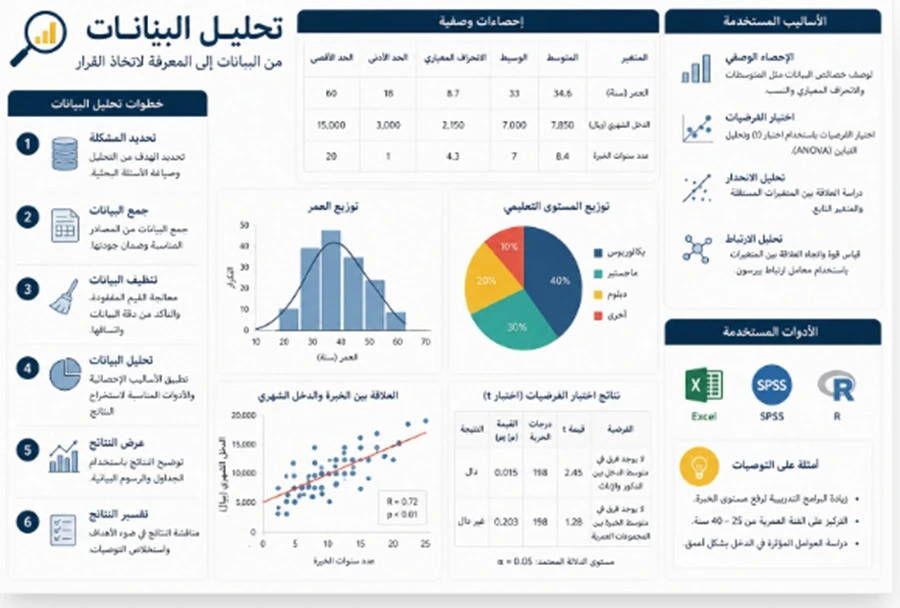
Checking consistency across research chapters is one of the most important parts of final review because a thesis may be well written chapter by chapter while still containing contradictions between sections.
The review begins with variables and terminology.
Is the variable named in the introduction using the same terminology in the methodology, tables, and discussion?
Does the operational definition provided in the first chapter match the way the variable was actually measured?
The sample should then be reviewed.
A researcher may write in the methodology that the sample contained 220 participants while the results show 216 because four responses were excluded.
This may be completely correct, but the difference needs to be clearly explained instead of leaving two different figures with no justification.
Research instruments should also be compared.
If the methodology states that a scale contains 25 items, the appendix should not contain only 24 without explanation.
The names and number of dimensions should also remain consistent.
Research questions and hypotheses need similar review.
If two questions were combined during analysis or the wording of a hypothesis changed, all connected locations should be updated.
One of the most useful consistency tests is to trace the full sequence:
Problem ← Objective ← Question or Hypothesis ← Data Collection Method ← Analysis ← Finding ← Discussion.
If one connection in that chain is broken, an element probably needs further review.
-
Consistency should be checked across chapters rather than only within each chapter because contradictions often appear after revisions made at different stages
-
Differences in sample size instrument items or other figures may have valid reasons but those reasons should be stated clearly
-
Every question or hypothesis should be traced from Chapter One through its finding and discussion to make sure it has not disappeared or changed without the rest of the thesis being updated
Reviewing the Thesis Before the Defense
Reviewing the thesis before the defense differs slightly from reviewing it for administrative submission because the student now needs to confirm not only that the document is correct but also that they can explain the scientific decisions behind it.
A committee member may ask: Why did you choose this methodology?
Why this sample?
Why this instrument?
How did you reach this finding?
Why does your result differ from a previous study?
For this reason, pre-defense review gives special attention to areas that require a clear scientific justification.
A list of issues that a reader may question can be prepared.
If the study contains a limitation or methodological decision that requires explanation, the researcher should understand the reasoning before the defense rather than encountering the question for the first time in front of the committee.
The main figures and findings should also be reviewed.
The student does not need to memorize every number, but should understand the key findings, their direction, and where they appear in the thesis.
Terminology should also be reviewed so the researcher uses the same expressions during the presentation and defense as those used in the written thesis.
It is also important to make sure the defense presentation does not contain information that differs from the final written thesis.
If a table or figure changes after the slides have been prepared, the presentation needs to be updated.
-
Pre-defense review focuses on the researcher's understanding of scientific decisions and study logic in addition to document accuracy
-
Major findings limitations and methodological choices deserve special attention because they may require clear explanation before the committee
-
The presentation and final thesis should remain consistent so a different figure or term does not appear during the defense
Final Review of Tables and References
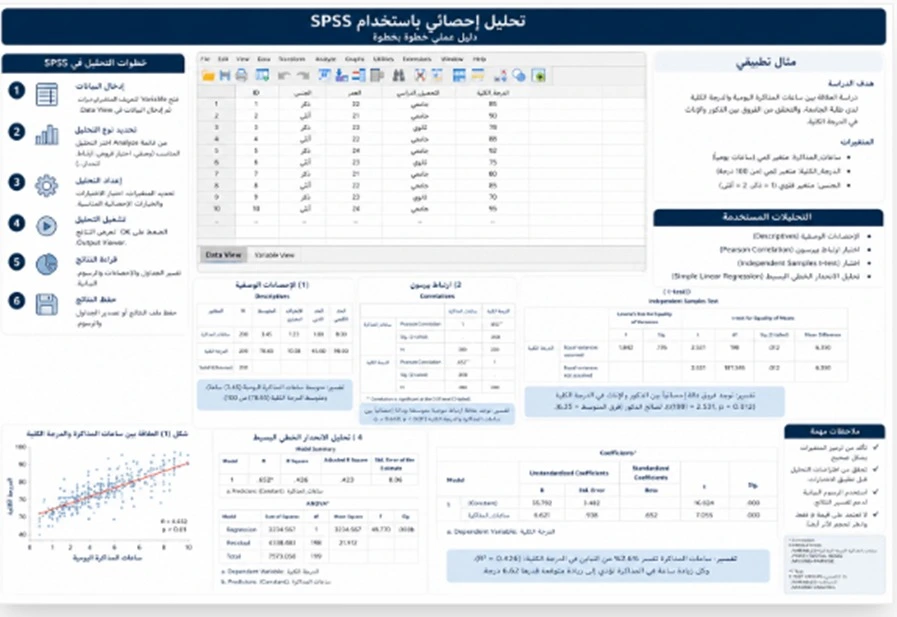
Final review of tables and references deserves a separate stage because these elements are often affected by last-minute revisions.
For tables, the number and title should be checked first.
Does Table 6 actually come after Table 5?
Does the title describe the data accurately?
The figures should then be reviewed.
If the text states that a percentage is 62.4%, does the same value appear in the corresponding table?
Totals should also be examined.
If categories are expected to add up to the total sample or to 100%, are there differences that require explanation because of rounding or missing data?
However, the reviewer should not independently “correct” a figure when a contradiction appears.
The issue should be returned to the researcher so the original analysis file or dataset can be checked.
References require a two-direction match.
Every in-text citation should be checked against the reference list.
Every entry in the reference list should also be reviewed to determine whether it is actually cited in the thesis.
Author names, years, titles, links, and DOI information should be checked according to the citation system in use.
References added during the discussion chapter deserve particular attention because they may have been inserted quickly into the text without being added to the final list.
-
Every figure in the text connected to a table or analysis should be matched rather than relying on memory or an older draft
-
Any statistical inconsistency should be traced back to the original data rather than choosing the figure that appears more reasonable
-
Reference matching should work from the text to the list and from the list back to the text to identify missing duplicate or unused sources
Checking Errors in a Scientific Dissertation
Checking errors in a scientific dissertation means actively looking for mistakes that may become invisible to a researcher who has worked with the document for a long period.
A student who has spent a year or more on a dissertation may read an incomplete sentence as though it were complete because they already know what they intended to say.
Final review therefore requires a different approach.
Repeated or missing headings should be checked.
Words partially changed through search-and-replace should also be reviewed.
Sentences referring to “the following chapter” or “the previous table” may become incorrect after sections have been reordered.
Another important issue is leaving an editor comment or supervisor note inside the final version.
Formatting highlights, tracked changes, and text that was intended to be deleted may also remain visible.
In bilingual documents, the Arabic and English titles or abstracts may no longer match.
Names of people, institutions, theories, and instruments should also be checked because a spelling checker may not recognize an incorrect specialized name.
Automated correction tools should not be treated as substitutes for reading because they may detect a misspelled word while failing to notice a wrong table number or a technical term used with two different meanings.
-
Final review should search for traces of the editing process itself such as comments highlights tracked changes and outdated cross-references
-
Arabic and English elements should be compared for title terminology and key findings when the thesis contains both languages
-
Automated correction tools are useful assistants but cannot replace scientific and technical consistency review across the entire thesis
Final Review of a Doctoral Dissertation
A final review of a doctoral dissertation requires particularly careful document management because of the size of the thesis and the number of chapters, references, tables, and accumulated revisions.
The issue is not necessarily that doctoral dissertations contain more errors, but that a larger number of elements increases the possibility of differences between versions.
The process can begin by confirming the complete set of dissertation components.
Preliminary pages.
Chapters.
References.
Appendices.
Research instruments.
Any additional required materials.
A broad consistency review can then be completed.
Theoretical terms introduced in the early chapters should be used consistently in the discussion.
Names of studies and theories should not change from one section to another.
The dissertation’s scientific contribution should also be reviewed.
Do the discussion and conclusion accurately explain what the research contributes without exaggeration?
In doctoral work especially, the boundaries of the conclusions should be clear.
The strength of a dissertation does not come from claiming that it has solved the entire problem, but from explaining precisely what was found and within which limitations.
Appendices should then be examined carefully.
If the thesis refers to an instrument, form, or letter in a particular appendix, that appendix should exist and use the correct label.
Finally, one organized submission file should be created rather than leaving dozens of similarly named versions.
-
Doctoral dissertations require stronger version and component management because of their size and the long period over which revisions accumulate
-
The scientific contribution should be stated precisely without exaggerating beyond what the methodology and findings support
-
Appendices and cross-references to them are part of the final dissertation and should be checked as carefully as chapters and references
Evaluating Thesis Readiness for Submission
Evaluating thesis readiness for submission does not mean guaranteeing that the university will approve the thesis because academic and procedural decisions remain with the relevant institution.
The purpose is to assess whether the current version contains clear problems that should be addressed before submission.
Readiness can be divided into four areas:
Academic readiness:
Are the problem, objectives, methodology, findings, and discussion consistent?
Language readiness:
Is the language clear, terminology consistent, and have major errors been reviewed?
Reference readiness:
Do citations, references, and quotations correspond correctly?
Technical readiness:
Do formatting, indexes, numbering, tables, and figures follow university guidelines?
If one area contains a major unresolved issue, excellent performance in the other areas does not automatically make the thesis ready.
A perfectly formatted thesis containing contradictory findings is not ready.
Likewise, a scientifically strong thesis that does not meet the formal submission requirements may still need revision before upload.
The most useful readiness evaluation produces a short final task list telling the student exactly what remains rather than a vague instruction such as “review the thesis again.”
-
Readiness does not mean guaranteed acceptance but rather that no obvious unresolved problems have been identified within the current review scope
-
Academic language reference and technical readiness should be assessed separately because strength in one area cannot compensate for a fundamental problem in another
-
The most useful outcome of final review is a specific list of remaining tasks that can be closed before the final submission file is created
Complete Checklist Before Thesis Submission
Before converting the thesis into its final submission version, the following checklist can be used:
Academic Content
-
The thesis title matches the study actually conducted.
-
The research problem has not drifted away from the final study.
-
All objectives are present and addressed.
-
Every research question or hypothesis has a corresponding result.
-
The methodology describes what was actually done.
-
Sample size is consistent or any difference is explained.
-
Instrument names are identical across all chapters.
-
The results section does not contain interpretation inappropriate for its position.
-
The discussion addresses the actual findings.
-
Recommendations are connected to the findings.
-
Study limitations are clear and do not contradict the claims made.
Language and Style
-
Scientific terminology is consistent.
-
Theory and instrument names are standardized.
-
No incomplete sentences remain.
-
Unnecessary repetition has been reviewed.
-
Punctuation is consistent.
-
Abbreviations are defined at first use where required by university guidelines.
-
The language of the abstract is consistent with the thesis.
Tables and Figures
-
All tables are numbered in sequence.
-
Every table has an accurate title.
-
In-text cross-references are correct.
-
Figures mentioned in the text match the table values.
-
All figures are clear and correctly numbered.
-
Sources are stated where required.
-
No table or figure appears without an in-text reference unless there is a justified reason.
References
-
Every citation has a corresponding reference.
-
Every reference in the list is used according to the required citation system.
-
Author names are consistent.
-
Publication years are consistent.
-
DOI information and links have been checked where needed.
-
One citation system is used consistently throughout the thesis.
-
Arabic and English references are arranged according to university requirements.
Formatting
-
The cover follows the required template.
-
Preliminary pages are in the correct order.
-
Margins are correct.
-
Fonts and sizes are consistent.
-
Page numbering is correct.
-
Main and secondary headings are standardized.
-
The table of contents is updated.
-
The list of tables is updated.
-
The list of figures is updated.
-
Appendices are arranged and numbered correctly.
Final Version
-
Comments have been removed.
-
Tracked changes have been accepted or rejected.
-
No highlighting or draft text remains.
-
Links work where required.
-
The file name is clear.
-
A backup copy has been created.
-
The final PDF has been opened and reviewed page by page.
-
Electronic submission instructions have been checked where the university uses a specific portal.
What Is the Difference Between Reviewing a Thesis Before Submission and Before Defense?
The two reviews overlap, but their main objectives are different.
Review before submission focuses more heavily on document completeness, university requirements, chapter consistency, references, and formatting.
Review before the defense adds another layer: the researcher’s ability to explain the study, justify decisions, and locate important findings quickly.
A student may go through both stages at different times depending on the university’s procedures.
When Should the Final Review Begin?
The best time is after major academic revisions have been completed and before the submission deadline by enough time to correct any problems that are discovered.
If final review begins before the chapters have stabilized, pages may be carefully edited only to be completely rewritten later.
If it is postponed until the final hours before submission, a problem may be discovered in a table, reference, or contents list without enough time to return to the original source.
It can be useful to divide the final review into separate rounds:
-
A round for academic consistency.
-
A round for tables and figures.
-
A round for references.
-
A round for language.
-
A round for formatting.
-
A short final round after conversion to PDF.
This approach is more accurate than trying to identify every possible type of error during one reading.
Common Errors That Appear in the Final Thesis Version
Even documents that have already gone through several rounds of review can contain final-stage errors such as:
-
A different thesis title on the cover and in the abstract.
-
Different publication years for the same reference.
-
A deleted research question whose result still remains.
-
An objective without a clear corresponding result.
-
A table that was updated while the text still contains the old figure.
-
An outdated table of contents.
-
An unintended blank page.
-
Incorrect page numbering after adding an appendix.
-
A supervisor comment that remains visible.
-
A scale or instrument name that changes between chapters.
-
An in-text citation missing from the reference list.
-
A reference whose citation was removed during editing but remains in the list.
-
A table title that does not match the table content.
-
A result in the abstract that differs from Chapter Four.
-
An English technical term translated in two different ways.
A structured checklist helps identify these details before they are discovered by the reader of the final version.
Why Choose Rukn for Thesis Review Before Submission?
At Rukn Translation and Educational Services, the review scope can be defined according to the actual condition of the document rather than treating every thesis in the same way.
A thesis may be academically strong and need only formatting and reference review.
Another may already be formatted but require consistency checking across chapters after supervisor revisions.
In another case, the student may need language proofreading together with table and index review.
A student may also need both Arabic and English versions checked for consistency in titles, abstracts, and terminology.
The practical advantage of final review is working through a clear checklist rather than making random edits throughout the file.
At the same time, the researcher remains responsible for the data, analyses, academic decisions, and the final version submitted under their name.
No responsible review should promise thesis approval or successful defense because those decisions belong to the university, supervisor, and examination committee.
Steps for Reviewing a Thesis Before Submission
The process can be organized through the following stages:
-
Receive the latest thesis version together with the university guide and supervisor comments.
-
Confirm the working version and prevent confusion with older files.
-
Check academic consistency from the research problem through the findings and discussion.
-
Review figures tables and charts against the written text.
-
Match in-text citations with the reference list in both directions.
-
Review language and terminology and standardize names and abbreviations.
-
Check preliminary pages abstracts and indexes.
-
Apply formatting requirements according to the university guide.
-
Review appendices and Arabic-English versions where applicable.
-
Create a final list of unresolved issues requiring a decision from the researcher or supervisor.
-
Update the document after revisions.
-
Review the final PDF page by page before uploading or printing.
The order matters because changing the content after completing the contents list and pagination can recreate formatting problems.
Thesis Review Prices Before Submission
There is no single fixed price for a thesis review before submission because the scope can vary considerably depending on the condition of the document.
Factors that may affect the scope include:
-
Number of pages
-
Master's thesis or doctoral dissertation
-
Number of tables and figures
-
Number of references
-
Current level of errors
-
Whether academic linguistic or technical review is required
-
Presence of both Arabic and English versions
-
Need to apply a specific university guide
-
Number of supervisor comments
-
Amount of reformatting required
-
Number of appendices
-
Submission deadline
A thesis that has already been professionally reviewed and only needs a final checklist is different from a dissertation containing major inconsistencies across chapters and references.
Likewise, formatting review alone has a narrower scope than reviewing consistency, language, tables, and references together.
For this reason, it is better to provide the latest version together with the university guide and specify the required review level so the work scope can be determined before pricing.
Frequently Asked Questions
Does final thesis review guarantee acceptance?
No. Thesis acceptance and approval are academic and procedural decisions made by the supervisor, committee, and university. Final review helps identify errors and improve document readiness within the agreed scope.
Should I review the thesis before or after supervisor revisions?
It is generally better to complete the major academic revisions first and then conduct the final review on the version closest to submission, although a staged review may also be useful for a large thesis.
Is formatting review enough before submission?
Not always. Formatting is only one part of readiness. A thesis may also need checking for consistency across chapters, tables, figures, references, abstract, and language.
Do I need to review the PDF after finishing the Word document?
Yes. Reviewing the final converted version is useful because tables, fonts, page breaks, or page numbers may appear differently after conversion.
What should I send when requesting thesis review?
Send the latest version of the thesis, the university guide, supervisor comments, and any submission template, and specify whether you need a comprehensive review or only formatting, language, references, or final consistency checking.
Conclusion
Successful thesis review before submission and defense with a full checklist is not measured only by the number of mistakes that were corrected.
The real objective is to make sure the final version tells one coherent research story from the title through the conclusion.
The problem connects to the objectives.
The objectives connect to the questions.
The questions connect to the methodology.
The methodology produces data.
The data appear in the findings.
The findings are discussed without exceeding their limits.
Tables, references, abstracts, indexes, and formatting then present that research in an organized form that follows university requirements.
The more systematically the thesis is reviewed through a clear checklist rather than random reading, the lower the risk that a small mistake will remain hidden among hundreds of pages or that an inconsistency from an older version will survive into the final file.
If you already have a master's thesis or doctoral dissertation at its final stage, prepare the latest version together with the university guide and supervisor comments, then contact Rukn Translation and Educational Services to determine whether the thesis needs a comprehensive consistency review, final table and reference checking, formatting review, or a final readiness assessment before submission and defense.
Need Help?
Contact us directly via WhatsApp and we will reply as soon as possible.
More Articles
Research Hypothesis Testing and Choosing the Right Statistical Test
Research hypothesis testing and statistical test selection based on variable type and study design, with accurate interpretation of significance, effect size, and results.
Read Article → Data ProcessingCronbach's Alpha Reliability Testing and Result Interpretation
Cronbach’s alpha reliability testing with internal consistency analysis, item review, result interpretation, and clear limits for use in academic research.
Read Article → Statistical AnalysisSurvey Data Coding and Preparation for Statistical Analysis
Survey data coding and preparation for statistical analysis, including variable definitions, missing data, reverse-coded items, data cleaning, and organized research datasets.
Read Article →