
Guide to Choosing a Brand Name for Saudi Arabia
Learn how to choose a translated brand name for the Saudi market that strengthens your brand identity and supports long-term growth.
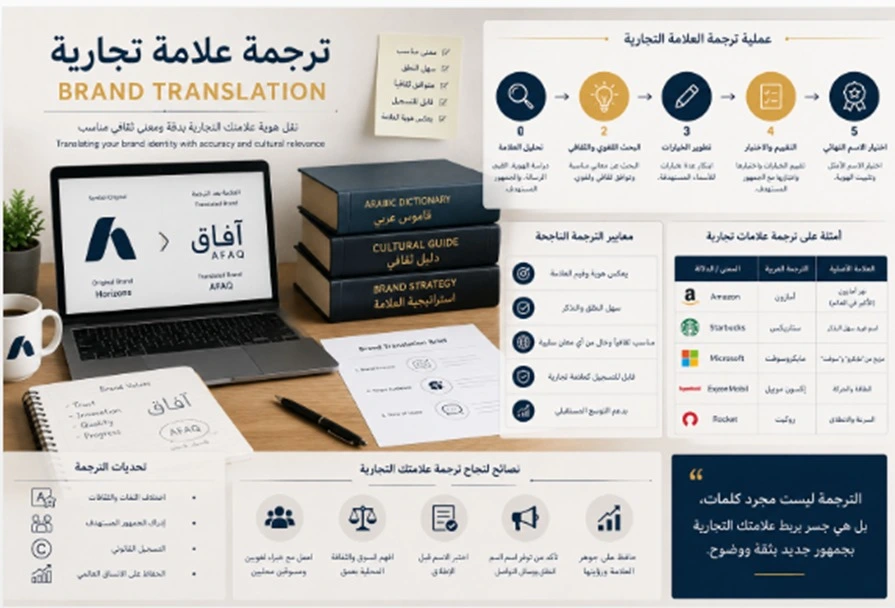
Many business owners believe that choosing a translated commercial name is a simple step that comes before launching a business. In reality, however, the process is much more important than it appears. A commercial name represents the first point of contact between a brand and its audience, and it is often the element customers remember for years. When entering the Saudi market, translation and localization become even more sensitive because the name must combine clarity, memorability, and the ability to communicate the brand’s identity in a convincing way. For this reason, choosing a suitable translated name is not simply a linguistic task. It requires a deep understanding of the market, customer expectations, local culture, and the long-term objectives of the brand.
Choosing a Suitable Commercial Name
Choosing a suitable commercial name begins with understanding an important reality: a name is not merely a label for a business activity. It is a marketing tool that influences first impressions, customer trust, and competitive differentiation. Experience from branding and identity development projects consistently shows that the names achieving long-term success are those selected through strategic planning rather than personal preference alone.
When choosing a suitable commercial name for the Saudi market, businesses should consider pronunciation, spelling, and the ability of customers to remember the name after hearing it only once. The name should also function effectively in advertising campaigns, search engines, websites, and social media platforms without losing clarity or impact. This becomes especially important when dealing with translated names because a poorly chosen word can significantly reduce visibility and market acceptance.
The evaluation process should always be conducted from the customer’s perspective rather than solely from the perspective of the business owner. A name that appears attractive internally may seem confusing, complicated, or irrelevant to the target audience. For this reason, professional organizations frequently rely on surveys, focus groups, and testing before making final naming decisions.
Marketing experience repeatedly demonstrates that investing time and resources in choosing a suitable commercial name from the beginning can save substantial costs associated with rebranding, renaming, or identity redevelopment in the future.
• Focusing on the needs and expectations of the target audience
• Ensuring ease of pronunciation and memorability in Saudi Arabia
• Testing the name across different marketing environments
• Evaluating the name from the customer’s perspective
• Considering the long-term impact on brand growth
Translating Commercial Names
Translating commercial names is a highly sensitive stage because the objective extends far beyond transferring a name from one language into another. The true goal is to preserve the meaning, value, emotional impact, and market positioning associated with the original brand.
One of the most common mistakes organizations make is relying on literal translation without evaluating the effect of the translated name within the target market. A name may be linguistically correct while lacking marketing appeal or failing to establish an emotional connection with customers. In some situations, translated names can even communicate meanings that differ significantly from the original brand message.
Commercial name translation also requires careful consideration of competition. Some translated names may initially appear suitable but resemble existing brands so closely that they reduce differentiation and weaken the development of a unique market identity.
Real-world experience consistently demonstrates that professional commercial name translation relies on research, analysis, and testing multiple alternatives before selecting a final option. This is why commercial name translation should be viewed as a strategic process rather than merely a linguistic exercise.
• Preserving the marketing value of the original name
• Avoiding poorly planned literal translations
• Studying competitors before approving a name
• Testing translated names with target audiences
• Prioritizing meaning and perception over words alone
Brand Localization
Brand localization has become a strategic choice for many companies targeting the Saudi market directly. Localization helps bring brands closer to customers while making them more compatible with local language, culture, and market expectations.
However, successful brand localization does not mean translating a name literally or replacing it with any available Arabic alternative. Instead, it requires a deep understanding of the brand identity and the values it represents. Based on this understanding, specialists develop names or Arabic adaptations capable of communicating those values effectively. In some situations, the most effective solution is creating an Arabic version that complements the original name rather than replacing it entirely.
Well-executed localization can improve customer engagement, increase memorability, and enhance visibility within marketing campaigns. These benefits are particularly noticeable in sectors that rely heavily on direct communication with end consumers.
Practical experience shows that brand localization achieves the strongest results when implemented as part of a broader branding strategy that includes naming, messaging, visual identity, and customer communication rather than focusing exclusively on the name itself.
• Strengthening connections between brands and local audiences
• Improving pronunciation and customer interaction
• Preserving the core values of the brand
• Supporting visibility within the Saudi market
• Balancing global identity with local relevance
Successful Brand Name
A successful brand name is not simply a name that sounds attractive or creative. It is a name capable of achieving measurable commercial and marketing objectives. In branding, success is not determined by how much business owners like a name but by how effectively it attracts customers, builds trust, increases memorability, and creates differentiation.
Analysis of successful brands reveals that the most effective names typically combine simplicity, clarity, and flexibility. Complex names may attract attention initially, but they often struggle to achieve long-term memorability and market recognition. Clear names, by contrast, tend to create stronger visibility and facilitate communication with customers.
A successful brand name must also be capable of growing alongside the company. Some names become overly tied to specific products or services, limiting future expansion opportunities. For this reason, businesses often select names that remain relevant as the organization evolves and diversifies.
Practical branding experience demonstrates that successful names achieve a balance between marketing appeal, strategic flexibility, and the ability to build long-lasting customer relationships.
• Combining simplicity with strength
• Supporting future growth and expansion
• Creating positive and lasting impressions
• Enhancing memorability and recognition
• Achieving meaningful market differentiation
Choosing a Company Name in Saudi Arabia
Choosing a company name in Saudi Arabia requires consideration of multiple factors related to local culture, customer behavior, and competitive conditions. A name that performs well in one market may not achieve the same results in another market with different cultural and behavioral characteristics.
An effective company name should be easy for local audiences to pronounce and remember while also reflecting the nature of the business or the values associated with the organization. Businesses must also consider legal and regulatory requirements to ensure that the name can be used without conflicting with existing entities.
Research is particularly important during this stage because the company name will become part of every future marketing campaign, advertisement, website, and customer interaction. Mistakes made during the naming process can affect branding costs and limit market growth opportunities.
Practical experience consistently shows that organizations investing sufficient time and effort into selecting a company name achieve stronger long-term results than businesses that approach the process quickly or without adequate planning.
• Understanding the characteristics of the Saudi market
• Ensuring ease of pronunciation and spelling
• Considering leg
Branding for the Saudi Market
Branding for the Saudi market has become more important than ever because of increasing competition and the growing awareness of customers. Today, having a quality product or service alone is no longer enough to guarantee success. Brand identity has become a major factor in building trust, influencing purchasing decisions, and creating lasting relationships with customers.
Effective branding for the Saudi market begins with a deep understanding of the target audience, including their preferences, expectations, values, and purchasing behaviors. It also requires developing a complete identity system that includes the brand name, visual identity, marketing messages, communication style, and overall customer experience.
When analyzing successful brands operating in Saudi Arabia, it becomes clear that organizations investing in professional branding strategies achieve higher levels of customer loyalty and stronger market recognition than businesses that focus solely on operational or pricing advantages. Customers increasingly prefer brands that communicate clearly, demonstrate consistency, and provide experiences that align with their expectations.
For this reason, building a strong brand in Saudi Arabia requires a strategic approach that starts with the name and extends to every customer interaction. Successful branding creates differentiation, strengthens credibility, and helps companies maintain sustainable growth in highly competitive industries.
• Understanding the needs and expectations of Saudi customers
• Developing a complete and consistent brand identity
• Building credibility and trust among target audiences
• Creating long-term customer loyalty
• Strengthening competitive advantages in the market
Brand Identity Development
The success of a commercial name does not end once it has been selected. To maximize its effectiveness, it must be supported through continuous brand identity development. Brand identity represents the framework that determines how customers perceive, remember, and interact with a company over time.
Brand identity development involves refining marketing messages, strengthening visual elements, clarifying company values, and ensuring consistency across all customer touchpoints. It also includes reviewing communication strategies and customer experiences to ensure that every interaction reinforces the intended brand image.
Practical experience demonstrates that companies investing in brand identity development achieve greater visibility, stronger customer trust, and improved competitive positioning. A well-developed identity makes it easier for customers to understand what the company stands for and why it deserves their attention.
Brand identity development should therefore be viewed as an ongoing process rather than a one-time activity completed during the launch phase. Markets evolve, customer expectations change, and brands must continuously adapt while maintaining consistency and authenticity.
• Strengthening marketing communication and messaging
• Aligning visual and verbal brand elements
• Enhancing customer perception and recognition
• Supporting differentiation within competitive markets
• Increasing long-term brand value
Marketable Brand Names
Marketable brand names differ from ordinary names because they are specifically designed to perform effectively across advertising campaigns, social media platforms, search engines, and customer conversations. A marketable name does more than identify a company. It helps attract attention, generate interest, and support marketing efforts.
One of the key characteristics of marketable brand names is simplicity. They are easy to pronounce, easy to remember, and capable of communicating a clear idea or impression about the business. In many cases, these names also create curiosity, encouraging customers to learn more about the brand.
Real-world examples consistently show that businesses with marketable names often achieve stronger brand awareness than competitors using complicated or generic names. A well-chosen name becomes an asset that contributes directly to marketing performance and customer acquisition.
Because of this, evaluating marketability should be a fundamental part of the naming process rather than an afterthought. A name should be tested not only for linguistic accuracy but also for its ability to perform effectively in marketing environments.
• Supporting advertising and promotional activities
• Increasing brand awareness and recognition
• Improving memorability and recall
• Strengthening digital marketing performance
• Encouraging customer engagement and interaction
Professional Brand Translation
Professional brand translation combines linguistic expertise, marketing knowledge, and a deep understanding of customer behavior. The goal is not simply to transfer words from one language to another but to preserve the value, personality, and emotional impact associated with the brand.
The process begins with a thorough analysis of the brand, including its objectives, target audience, positioning, and communication style. Based on this analysis, specialists develop linguistic and marketing solutions that maintain the original brand experience while adapting it to the expectations of the new market.
Professional translation also involves evaluating multiple alternatives and testing different approaches before final implementation. This reduces the risk of misunderstandings, negative associations, or the need for costly rebranding initiatives in the future.
Experience across different industries demonstrates that professional brand translation significantly improves market acceptance and helps organizations establish stronger relationships with local audiences. It creates consistency between global identity and local relevance, enabling brands to compete more effectively.
• Transferring brand value rather than words alone
• Understanding target audience expectations
• Testing alternatives before implementation
• Avoiding common literal translation mistakes
• Supporting successful market expansion
Building a Strong Brand Identity
Building a strong brand identity is the ultimate objective of every stage discussed previously, from selecting a name and translating it to developing communication strategies and marketing messages. A strong identity helps customers recognize, trust, and remember a brand more easily.
A powerful brand identity improves customer confidence, enhances the overall customer experience, and increases the likelihood that customers will recommend the brand to others. It also strengthens competitive positioning and makes expansion into new markets more manageable.
Analysis of successful brands consistently shows that strong identities are not created by chance. They are the result of systematic efforts focused on understanding customers, delivering consistent experiences, and communicating clear values across all channels.
For this reason, investing in a strong brand identity is one of the most valuable strategic decisions a company can make. It provides long-term benefits that extend beyond marketing performance and contribute directly to sustainable business growth.
• Creating a clear and memorable brand image
• Building customer trust and loyalty
• Strengthening competitive positioning
• Supporting future growth and expansion
• Increasing long-term brand value
Conclusion
Choosing a translated commercial name suitable for the Saudi market is not simply a matter of translation. It is a strategic process that establishes the foundation of a brand’s future success. A successful name must communicate the identity, values, and personality of the brand in a way that resonates with local audiences. By focusing on selecting an appropriate commercial name, translating brands professionally, developing brand identity, and creating marketable naming solutions, businesses can significantly improve their chances of success and achieve stronger visibility within the Saudi market. The more the naming process is based on research, analysis, and real-world testing, the greater the opportunity to build a successful and sustainable brand.
Frequently Asked Questions
What are the most important criteria when choosing a commercial name for the Saudi market?
The most important criteria include clarity, ease of pronunciation, memorability, differentiation from competitors, and the ability to support future business growth.
Is commercial name translation different from ordinary translation?
Yes. Commercial name translation focuses on transferring brand value, perception, and marketing impact rather than simply translating linguistic meaning.
When is brand localization an appropriate choice?
Brand localization is appropriate when it improves local acceptance, strengthens customer communication, and supports market growth without damaging the core identity of the brand.
What are marketable brand names?
Marketable brand names are names designed to perform effectively in advertising, digital marketing, and customer communication while remaining easy to remember and promote.
How can I test a commercial name before adopting it?
You can test a name through customer surveys, audience feedback sessions, market research, and practical evaluations within different marketing environments.
Why is branding important in the Saudi market?
Branding helps build trust, improve customer experiences, create differentiation, and increase the likelihood of long-term business success in a competitive environment.
What is the relationship between a commercial name and brand identity?
The commercial name is one element of brand identity, which also includes values, messaging, design, customer experiences, and the overall perception customers have of the brand.
al and regulatory requirements
• Connecting the name with company values
• Evaluating the long-term impact of the decision
Need Help?
Contact us directly via WhatsApp and we will reply as soon as possible.
More Articles
University Case Study Review with Analysis and References
University case study review with problem analysis, evidence organization, theory application, references, recommendations, and final academic checking before submission.
Read Article → Thesis PreparationResearch Survey Design and Review Before Validation and Distribution
Research survey design and review before validation and distribution, including dimensions, items, response options, research objectives, pilot testing, and university requirements.
Read Article → Scientific Research WritingAPA 7 Reference Formatting for Arabic and English Sources
APA 7 reference formatting for Arabic and English academic sources, including in-text citations, reference lists, DOI links, quotations, and Saudi university requirements.
Read Article →